How to Trade Crypto Breakouts (And Stop Getting Trapped by Fakeouts)
Learn how to trade crypto breakouts with proven strategies that work. I'll show you how to spot real breakouts, avoid fakeouts, and improve your win rate.

In this article
Learning how to trade crypto breakouts nearly cost me everything. Back in 2019, I watched a Bitcoin chart break above $12,000 resistance, slammed the buy button, and within 6 hours I was staring at a 15% loss. That wasn’t bad luck. That was ignorance.
Here’s the uncomfortable truth: 60-70% of crypto breakouts fail. Most traders don’t know this. They see price punch through a level and assume the trend will continue. The market has other plans.
I’ve spent years refining my approach to breakout trading. The strategy I’m about to share has saved me from countless fakeouts and helped me catch the real moves. It’s not complicated, but it requires discipline – something I had to learn the hard way.
What is a Crypto Breakout (And Why Most Traders Get It Wrong)
A crypto breakout happens when price moves beyond a key support and resistance level with momentum. Think of these levels as invisible barriers where buyers and sellers have historically fought for control.
When price breaks through, it signals a potential shift. Buyers overwhelm sellers at resistance. Or sellers crush buyers at support. Either way, momentum is building.
The problem? Crypto markets are manipulated, trade 24/7, and have thinner liquidity than traditional markets. This creates the perfect environment for support and resistance levels to break temporarily – just long enough to trap eager traders before reversing.
I call these “liquidity grabs.” Big players push price through a level, trigger stop losses and buy orders, then reverse course. If you don’t understand this dynamic, you’ll keep getting trapped.
The Anatomy of a Real Breakout (What You Need to See)
Not all breakouts are created equal. After hundreds of trades, I’ve learned to recognize the signals that separate real breakouts from traps.
Volume Confirmation: The Non-Negotiable Signal
This is the single most important factor. When I started ignoring volume analysis, my win rate collapsed.
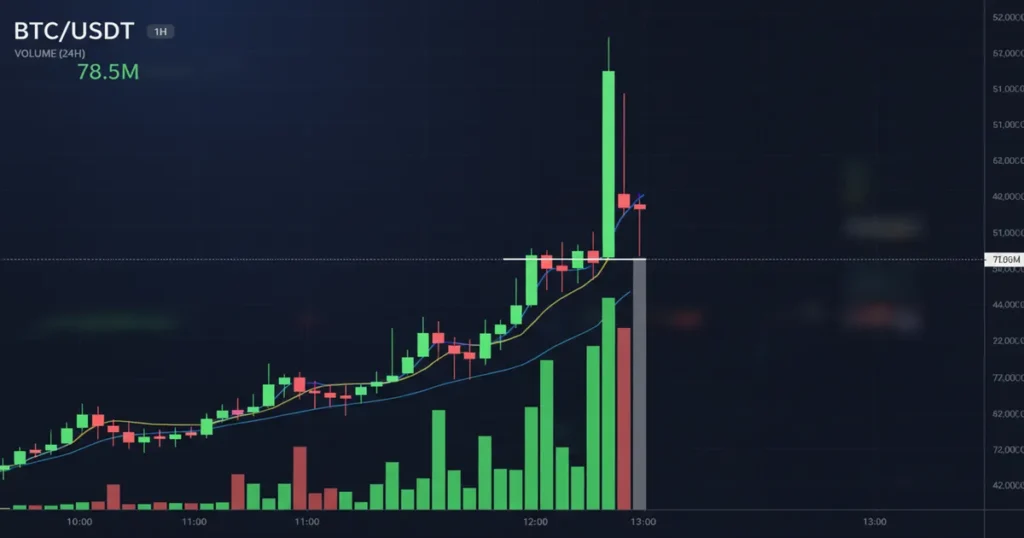
Volume must spike 50-100% above the 20-period average during a legitimate breakout. Anything less? Red flag. Walk away.
Volume cannot be faked at scale. If whales are actually pushing price through a level with conviction, you’ll see it in the volume bars. Low volume breakouts are traps waiting to spring.
Price Action: The Breakout Candle That Matters
The candle that breaks the level tells a story. A strong breakout candle has a full body with small wicks. It closes near its high (for bullish) or low (for bearish).

Long wicks? That’s indecision. That’s buyers and sellers fighting. That’s often a reversal coming. I’ve learned to read these signals through reading candlestick charts obsessively.
Wait for the full candle close. Never trade on a wick alone. I can’t count how many times I bought a “breakout” that was just a wick poking above resistance before reversing.
Context: Why Trend Direction Changes Everything
A 15-minute breakout that contradicts the 4-hour downtrend? You’re fighting institutional positioning. You will lose.
Breakouts with the trend have dramatically higher success rates. If the daily chart shows an uptrend, bullish breakouts on lower timeframes are more likely to work. This multi-timeframe alignment is non-negotiable in my process.
5 Chart Patterns That Lead to High-Probability Breakouts
Before hunting breakouts, you need to know which patterns actually work. Here’s what chart pattern recognition has taught me over the years:
Ascending Triangle (The Bull’s Favorite)
Higher lows pushing against flat resistance. When this pattern breaks upward, it has 73% reliability. I love these setups because the invalidation is clear – if price drops below the rising trendline, I’m out.
Descending Triangle (Bears Take Control)
Lower highs pressing down on flat support. The mirror image of ascending triangles. These typically break bearish, signaling continuation of a downtrend.
Symmetrical Triangle (The Directional Coin Flip)
Both support and resistance are converging. Price is coiling. The breakout can go either way, but it usually continues in the direction of the prior trend. I trade these more cautiously and always wait for confirmation.
Flags and Pennants (Continuation Signals)
These form after strong moves – a brief pause before the trend resumes. My favorite flags are tight, orderly consolidations on declining volume. When volume spikes and price breaks, the move often matches the prior leg.
Wedges (The Reversal Warnings)
Falling wedges suggest bullish reversals. Rising wedges signal bearish reversals. They’re counter-trend patterns, so I trade them with smaller size and tighter stops.
How to Spot a Fakeout Before It Destroys Your Account
This section might save your trading career. Fakeouts have cost me more money than any other mistake.
Low Volume = Red Flag
If volume is below average during a breakout, it’s a trap. Period. Smart money isn’t participating. You’re buying into thin air.
Weekend and Low Liquidity Breakouts
I have a rule: no weekend breakouts. They almost always reverse by Monday. Thin liquidity makes manipulation easy. I learned this lesson after getting wrecked on a Sunday night “breakout” that reversed 8% by Tuesday.
RSI Divergence Warning Signs
Watch the RSI indicator closely. If price makes a higher high while RSI makes a lower high? That’s bearish divergence. The breakout will likely fail.
For bullish breakouts, I want RSI between 50-70. Below 50 means momentum isn’t supporting the move. Above 70 means the breakout is already extended.
Step-by-Step: My Breakout Trading Checklist
This is the exact process I follow for every breakout trade. No shortcuts.
Before the Breakout: What to Watch
- Identify the level: Mark clear support/resistance on the 4-hour or daily chart
- Watch for consolidation: Price should be coiling near the level, not drifting
- Check the trend: Is this breakout with or against the larger trend?
- Set alerts: Don’t stare at charts. Let the chart come to you
During the Breakout: Entry Rules
- Wait for candle close: A wick isn’t a breakout
- Confirm volume spike: 50-100% above 20-period average
- Check RSI: Should be 50-70 for bullish breakouts
- Enter 50% position: Reserve the other half for the retest
After the Breakout: Managing the Trade
The strongest breakouts often retest the broken level. If former resistance holds as new support, that’s high-confidence confirmation. Add the remaining 50% of your position.
On 4-hour timeframes, retests typically occur within 4-20 hours. On daily charts, expect 1-5 days.
The Best Indicators for Breakout Trading
I keep my charts clean, but these indicators have proven their worth.
Volume Indicators (OBV, Volume MA)
On-Balance Volume is underrated. When OBV makes new highs before price does, it signals buying pressure building under the surface. This divergence often precedes breakouts.
I also use a simple 20-period volume moving average to quickly spot whether current volume is above or below normal.
Momentum Indicators (RSI, MACD)
RSI between 50-70 is the sweet spot for bullish breakouts. The MACD indicator crossing above its signal line adds confirmation.
Volatility Indicators (Bollinger Bands, ATR)
The Bollinger Bands squeeze is a powerful signal. When the bands contract tightly, volatility is coiling. The breakout from this squeeze often produces explosive moves.
Average True Range rising during a breakout confirms strength. If ATR is flat or declining while price “breaks out,” the move lacks conviction.
Risk Management: How to Survive Breakout Trading
Here’s the truth that most trading educators won’t tell you: breakout trading has roughly a 30% success rate according to research from Tradeciety. That’s actually better than pure trend-following at 20%, but it means you’ll lose most trades.
Your survival depends on proper position sizing:
- Never risk more than 1-2% per trade
- Scale entries: 50% on break, 50% on retest
- Cut losses immediately when your stop hits
- Take partial profits at measured move targets
I blew up my first account because I sized positions like every trade would win. Now I size them knowing most will lose. That mindset shift saved my trading career.
Common Breakout Trading Mistakes (I Made All of These)
Let me save you some expensive lessons:
- Trading every breakout: Be selective. Quality over quantity.
- Ignoring volume: The fastest way to get trapped.
- Buying without confirmation: Wait for the candle close.
- Chasing extended moves: If price is already 3-5% past the level without pullback, the risk/reward is gone. Wait for the next setup.
- Trading on weekends: Just don’t.
- Hoping for recovery: Hope is not a strategy. Cut your losses.
That last one nearly broke me. I remember watching a position go 10% against me, convinced it would recover. It didn’t. Learning to cut losses fast and managing FOMO was painful, but necessary.
Which Timeframe is Best for Breakout Trading?
4-hour and daily charts produce the most reliable breakout signals. Lower timeframes generate too much noise and false signals.
My approach: identify the structure on the 4-hour chart, look for entry triggers on the 1-hour. This multi-timeframe approach filters out a lot of garbage setups.
False breakouts rarely persist across multiple timeframes. If the 1-hour shows a breakout but the 4-hour doesn’t confirm, stay out. If you want to track and analyze patterns, use a proper charting platform with multi-timeframe views.
Breakout Trading Strategy: Putting It All Together
Let me walk you through my complete workflow:
- Scan for setups: Look for consolidation patterns near key levels on the 4-hour chart
- Mark your levels: Draw horizontal support/resistance where price has reacted multiple times
- Set alerts: Get notified when price approaches your levels
- Wait for the break: Full candle close beyond the level
- Confirm with volume: Must be 50-100% above average
- Check momentum: RSI 50-70, MACD crossing up
- Enter 50%: Initial position on the break
- Wait for retest: Add remaining 50% if the level holds as new support
- Manage the trade: Stop below the breakout point, scale out at targets
- Journal everything: Record what worked and what didn’t
Breakout trading isn’t easy. Most trades will lose. But when you catch a real breakout with proper position sizing and risk management, the winners can more than pay for the losses.
I’ve been trading breakouts for years now. The strategy has evolved, but the core principles haven’t changed: volume confirms, patience pays, and discipline saves accounts. Don’t chase. Don’t hope. Follow the process.
If you’re just getting started with technical analysis, master support and resistance first. Then move to candlestick patterns. Then volume. Build your foundation before trying to trade breakouts. They’ll still be there when you’re ready.