Crypto Sector Rotation: Follow the Money From Bitcoin to Altcoins
Crypto sector rotation explained — how capital flows from Bitcoin to altcoins, which sectors move first, and the key signals to watch before the next altseason.

In this article
I learned about crypto sector rotation the expensive way. Late 2020. I was sitting in a heavy Bitcoin bag, watching ETH quietly carve out new highs against BTC, and telling myself it was a head fake. By the time DeFi summer was in full swing — Aave, Compound, Uniswap all printing 10x — I had missed the bulk of it. That single miss cost me more than my first car. It also taught me the most important lesson of any bull market: the difference between a 2x return and a 20x return is usually just knowing which sector capital flows into next.
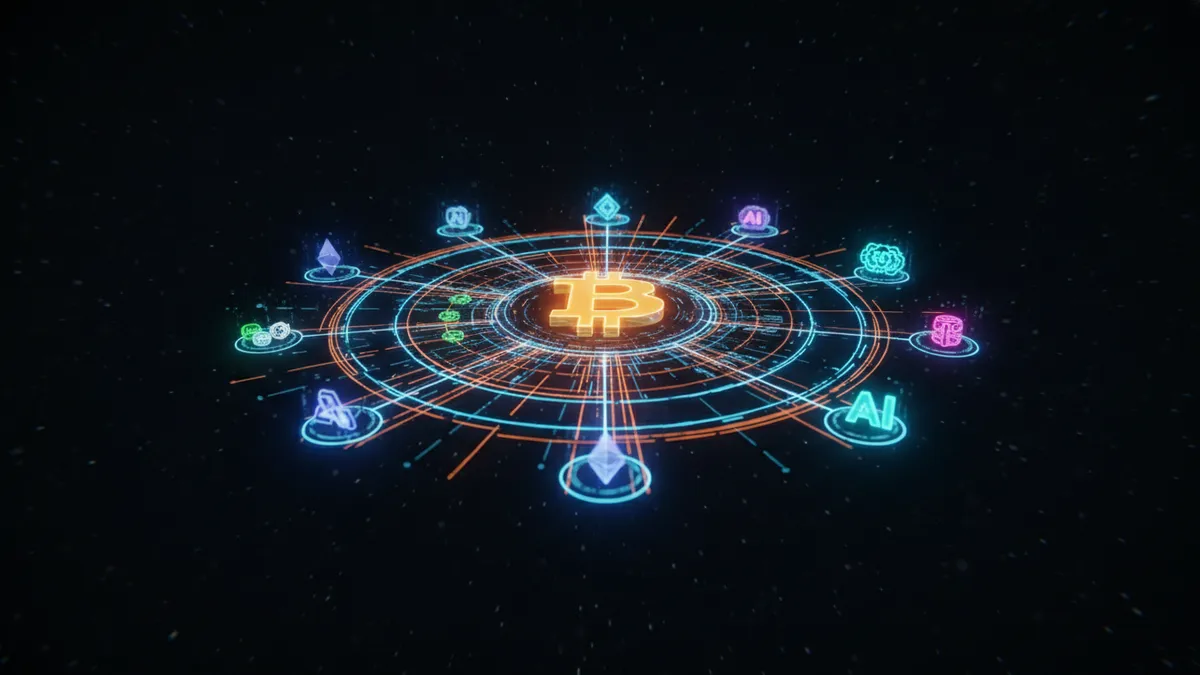
Sector rotation is the engine of every crypto cycle. If you understand the order capital moves in, you stop chasing tops and start positioning before the move. This guide walks through the five phases, the three confirmation signals I actually use, the major sectors and when they fire, and where we sit right now in May 2026 inside the broader crypto market cycles.
Quick answer: Crypto sector rotation is the predictable sequence of capital flowing from Bitcoin into Ethereum, then large-cap altcoins, then narrative sectors (DeFi, AI, RWA, memes), and finally back to Bitcoin. The rotation is confirmed when three signals fire together: Bitcoin dominance turns down, the ETH/BTC ratio climbs, and TOTAL3 outperforms.
What Is Crypto Sector Rotation?
Crypto sector rotation is the cyclical movement of capital between different asset categories inside the crypto market. Money does not land in every coin at once. It moves in a sequence: Bitcoin first, then Ethereum, then the liquid large-cap alts, then the speculative narrative sectors, and eventually back to Bitcoin when risk turns off.
This is not a crypto-native idea. It is borrowed directly from traditional market sector rotation, where equities rotate between defensives, cyclicals, tech, and energy depending on the business cycle. Crypto compresses that cycle into months instead of years. The phases are sharper, the moves are larger, and the punishment for getting the order wrong is much faster.
Why it matters: most retail traders end up holding the wrong sector at the wrong time. They chase memes during phase 2, chase L1s during phase 5, and rotate into stables right before altcoin season actually fires. Reading rotation is how you stop being the exit liquidity.
The Five Phases of Crypto Capital Flow
Every cycle I have traded has followed roughly the same shape. The percentages change, the speed changes, the favorite narratives change — but the order does not.
Phase 1: Fiat Enters Bitcoin (BTC Leads)
Bitcoin is always the on-ramp. Institutional and retail capital comes in through BTC first because it has the deepest liquidity, the clearest regulatory standing, and now the ETF infrastructure. In Q1 2026 alone, JPMorgan tracked roughly $11 billion in digital asset inflows. Almost all of that landed in Bitcoin before touching anything else.
Phase 2: Ethereum Catches the Bid
Once BTC has run hard and traders start hunting better risk/reward, capital rotates into Ethereum. The ETH/BTC ratio turning up is the single cleanest signal that phase 2 has started. If ETH cannot beat BTC, the broader altcoin rotation has not started — full stop.
Phase 3: Large-Cap Altcoins Get Their Turn
SOL, BNB, XRP, the established L1s. These are liquid enough to absorb serious capital quickly and recognized enough that institutions and large funds will touch them. During the Feb–May 2021 window, large-cap alts returned 174% while Bitcoin managed 2%. That is the move you do not want to sit out.
Phase 4: Narrative Sectors Explode (DeFi, AI, RWA, Memes)
This is where the life-changing returns live and where most people get destroyed. Capital floods into themed baskets — AI tokens, DePIN, RWA infrastructure, meme coins. Returns of 10-50x are possible, but the holding windows are short and exits are violent. Discipline matters more than conviction here.

Phase 5: Risk-Off — Capital Flows Back to BTC
Capital sprints back toward Bitcoin and stablecoins. The meme coins and small caps that led phase 4 give back 80-90% in weeks. I have watched friends — sober and otherwise — give back entire years of gains in a single phase 5. If you do not have a rotation plan back to safety, you do not have a plan.
The Three Signals That Confirm Rotation Is Starting
I do not act on one signal alone. I learned that the hard way. As the Nexo Research Team put it when they studied historical altseason setups:
“None of them alone was sufficient.”
I need all three of these confirming together before I size up into alts.
Signal 1: Bitcoin Dominance Peaks and Turns Down
Bitcoin dominance measures BTC’s share of total crypto market cap. Historically, dominance peaks somewhere between 60-65% before serious altcoin rotation accelerates. As of May 2026, it sits around 60% — structurally favorable for a rotation, but the breakdown has not confirmed. I want to see weekly closes below 58% before I start treating it as a real shift.
Signal 2: ETH/BTC Ratio Starts Climbing
ETH/BTC is the canary in the coal mine. When it turns up on the weekly timeframe and starts taking out prior resistance, phase 2 is alive. When it grinds sideways or down, every “altseason is here” thread on Crypto Twitter is wrong.
Signal 3: TOTAL3 Begins Outperforming
TOTAL3 is the total crypto market cap minus BTC and ETH — essentially a pure altcoin momentum gauge. When TOTAL3 starts outperforming TOTAL (the all-coins index), broad altcoin strength is real. I pair this with the CoinMarketCap Altcoin Season Index, which reads about 37 right now. A reading above 75 confirms altseason. Below 25 is Bitcoin season. We are still firmly in Bitcoin’s grip.
The Major Crypto Sectors and When They Move
This is the piece most rotation articles skip. Knowing capital rotates is useless if you cannot map which sectors catch the bid in what order. Here is the order I watch.
Layer 1 Blockchains (Early Rotation)
SOL, AVAX, ADA, NEAR. These move first inside the altcoin universe because they are liquid, recognized, and lower-risk relative to the deeper alt categories. If L1s are not participating, nothing further down the risk curve will hold its bid.
Layer 2 Scaling Solutions (Mid Rotation)
Layer 2 scaling solutions like ARB, OP, and the Base ecosystem catch bids as DeFi activity picks up on top of them. Watch transaction volume and active addresses — fundamentals matter more for L2s than for any other sector.
DeFi Protocols (Mid-to-Late Rotation)
DeFi protocols usually catch their bid once L1 and L2 ecosystems have warmed up. TVL is the leading indicator I trust. Rising TVL ahead of price is an accumulation signal. I use the DeFiLlama TVL tracker daily. Liquid staking protocols tend to lead DeFi sub-rotations because they sit closest to ETH’s yield curve.
AI and DePIN Tokens (Late Rotation, High Beta)
In 2025, 40% of all crypto VC tracked AI-convergence themes — up from 18% the year before. Tokens like Bittensor (TAO) and Render Network (RENDER) sit at the intersection of AI hype and on-chain compute. DePIN logged $150 million in real on-chain revenue in January 2026 alone, even after a brutal -76% drawdown in 2025. This is high-beta, high-conviction territory.
Real World Asset (RWA) Protocols (Institutional Rotation)
Real World Asset (RWA) tokens rotate on a parallel track, driven by institutional flow rather than retail enthusiasm. The sector grew from roughly $5.5 billion in TVL in early 2025 to $29.2 billion by April 2026 on public blockchains. That is the fastest institutional rotation crypto has ever seen.
Meme Coins (Last to Move, First to Crash)
Meme coins are last in, first out. They run when retail FOMO peaks and they collapse the second risk turns. Treat them as pure speculation. Hard size limits, hard stops, hard exits. Do not marry a frog.
How to Actually Trade the Rotation Without Getting Wrecked
Theory is cheap. Here is what I actually do.
My weekly rotation routine:
- Sunday morning: Check BTC dominance weekly close. Direction matters more than the absolute number.
- ETH/BTC chart: Mark the prior weekly high. Has it been taken out?
- Altcoin Season Index: Note the reading. Confirmation only, never a leader.
- Sector heat map: Which sectors closed green for the week? Map against rotation order.
- Journal: One paragraph. What is the market telling me that I do not want to hear?
Build Your BTC Dominance Watch Routine
Weekly closes only. Daily spikes are noise. Until dominance breaks down and stays down, you are still in Bitcoin season — no matter how much your group chat insists otherwise.
Position Sizing Through Each Phase
The further from BTC, the smaller the position. I size down as I move down the risk curve. A 20% portfolio allocation makes sense for ETH. A 1-2% allocation is the ceiling for any single meme coin. Read my full breakdown on position sizing if you have not built your framework yet.
Know Your Exit Before You Enter
Every position needs a profit target before I open it. L1s I target 2-3x. Narrative sectors 5x+. Memes I scale out aggressively starting at 2x. How to take profits is the skill that separates traders who keep their gains from traders who give it all back.
The Mistakes That Burned Me (And Will Burn You)
I have made every one of these. Some of them more than once.
- Chasing sectors after they have already moved 5x. Confirmation bias trap. By the time you are sure, the move is done.
- Holding a meme coin through the full cycle expecting it to recover. Most do not. Plan your exit on the way up.
- Ignoring Bitcoin dominance entirely. Every altcoin pump is not altseason. Sometimes it is just a bounce inside Bitcoin season.
- Not having a rebalancing plan. Rotating profits back to BTC and stables as sectors peak is the entire game. Learn rebalancing your crypto portfolio before you need it.
- Forgetting the 2026 structural shift. With $130 billion+ locked in Bitcoin-only ETFs, institutional capital often stays BTC-only. The rotation pool is smaller than it was in 2020-2021. Expect a different shape this time.
Where the Market Stands Right Now (May 2026)
I want to be honest about where we actually are, because most rotation content is wishcasting altseason that has not started.
- BTC dominance: ~60%. Bitcoin season still dominant.
- Altcoin Season Index: ~37. Well below the 75 threshold.
- ETH/BTC: Still suppressed. Phase 2 has not started.
- What I am watching: Dominance breakdown below 58% on a weekly close, plus ETH/BTC clearing recent resistance.
- Early movers if rotation begins: RWA infrastructure, DePIN compute, established L2s.
This is the accumulation window — not the chase window. I am building positions slowly, journaling triggers, and refusing to FOMO into anything that has not earned my conviction.
Frequently Asked Questions
How long does a full crypto sector rotation take?
Historically, a complete cycle from BTC leadership through meme-coin blowoff and back to BTC has taken 12-18 months. The 2026 cycle is showing signs of compressing or stretching unpredictably as ETF demand smooths out the historical four-year rhythm.
Can I just buy an altcoin index and skip the rotation work?
You can, but you will eat the full phase 5 drawdown without a rotation plan. Indexes do not exit narrative sectors before they crash. Active rotation outperforms passive indexes during the back half of the cycle.
What is the single best signal if I only watch one?
Bitcoin dominance on the weekly timeframe. It is not perfect, but if I had to pick only one chart on the wall, it would be that one.
Is meme coin trading worth it during rotation?
Only with strict size limits — I cap any single meme at 1-2% of portfolio — and only if you have already taken profits on lower-risk plays. Meme coins are the dessert, not the meal.
Your Next Move
Sector rotation is not a prediction. It is a framework for staying patient while the market gives you signals to act on. The traders who survive multiple cycles are the ones who position before confirmation, take profits during euphoria, and rotate back to safety before the violence of phase 5.
If this is where you want to level up next, start with a clean crypto portfolio allocation strategy so you know exactly how much capital you can deploy into each phase. Then pair it with your rotation routine and your exit plan. That is the loop I run every week, and it is the loop that finally kept me from giving back gains the way I used to.
The next altseason will come. The only question is whether you will be positioned before it, or chasing after it.