What is Ethereum: The Programmable Blockchain Behind Most of Crypto
What is Ethereum? Learn how ETH works, why it powers $119B in DeFi, and what makes it different from Bitcoin. A no-hype guide from a crypto trader.


In this article
I remember the first time someone told me to look into Ethereum. It was 2017, and I thought it was just another cryptocurrency. Another Bitcoin knockoff. I bought some ETH on Coinbase, watched the price bounce around, and figured that was the whole story. It took me embarrassingly long to realize that what is Ethereum is a much bigger question than “what’s the price of ETH?” If you understand what blockchain technology is, you already have a head start. But Ethereum takes that foundation and builds something radically different on top of it.
Ethereum is a programmable blockchain. It’s the platform that powers most of the crypto applications you’ve heard about. Think of it as a global computer that nobody owns, nobody can shut down, and anyone can build on. That’s the short answer. The longer answer is what makes it interesting.
Ethereum, Explained Simply
At its core, Ethereum is a decentralized platform that runs smart contracts. These are programs that execute automatically when certain conditions are met. No banks, no lawyers, no middlemen needed.
Vitalik Buterin proposed Ethereum in a 2013 whitepaper (you can read the original Ethereum whitepaper if you’re feeling ambitious). The network launched on July 30, 2015. Buterin’s core idea was simple but powerful: Bitcoin proved you could have decentralized money. What if you could have a decentralized everything?
The Difference Between Ethereum and Ether (ETH)
This trips up almost everyone at first. It tripped me up for two years. Here’s the distinction:
- Ethereum is the network. The platform. The blockchain itself.
- Ether (ETH) is the cryptocurrency. The token you buy, sell, and use to pay for transactions on the network.
When someone says “I bought Ethereum,” they almost always mean they bought ETH. It’s like saying “I bought the internet” when you really bought stock in an internet company. The language is sloppy, but now you know the difference.
Ethereum vs. Bitcoin: Two Very Different Animals
Bitcoin and Ethereum get compared constantly, but they’re solving different problems. Bitcoin is digital gold. It’s designed to be a store of value with a hard cap of 21 million coins. That’s it. That’s the feature.
Ethereum is a programmable world computer. It has no hard supply cap, but EIP-1559 burns a portion of fees with every transaction. During high-demand periods, ETH actually becomes deflationary. More importantly, Ethereum lets developers build applications directly on its blockchain. Bitcoin doesn’t do that (at least not natively).
How Ethereum Actually Works
Let’s get under the hood. You don’t need a computer science degree for this, but understanding the basics helps you make smarter decisions about whether ETH belongs in your portfolio.
The Ethereum Virtual Machine (EVM)
The EVM is Ethereum’s engine. It’s a global, distributed computer running on thousands of nodes around the world. Every node runs the same code and validates the same transactions. That redundancy is what makes Ethereum decentralized and resistant to censorship.
When a developer deploys a smart contract, it runs on the EVM. When you swap tokens on Uniswap or lend crypto on Aave, you’re interacting with code running on this virtual machine. It processes over 1.6 million daily transactions according to Ethereum network statistics.
Smart Contracts: The Core Innovation
Smart contracts are self-executing programs stored on Ethereum’s blockchain. They run exactly as written. No one can alter them after deployment. No one can stop them.

Here’s a real-world analogy: imagine a vending machine. You put in money, select your item, and the machine delivers it. No cashier needed. Smart contracts work the same way, except they handle financial transactions worth billions of dollars.
The practical applications are massive. Lending, borrowing, trading, insurance, gaming. If you can code the logic, you can deploy it on Ethereum. Validators on the network can also extract additional value through MEV (Maximal Extractable Value), which is worth understanding as you go deeper.
Gas Fees: Why Every Transaction Costs Money
Every action on Ethereum costs gas fees. Gas is the unit that measures computational effort. More complex transactions cost more gas. You pay gas in ETH.
Why? Two reasons. First, gas fees prevent spam. Without a cost, someone could flood the network with junk transactions. Second, gas compensates the validators who keep the network running.
I learned this the expensive way. During the 2021 bull run, I paid over $80 in gas just to send some tokens. A simple transfer. Eighty bucks. That moment taught me more about Ethereum’s scaling challenges than any whitepaper ever could.
What You Can Actually Build and Do on Ethereum
Ethereum isn’t theoretical. It has over 4,200 active dApps running across mainnet and Layer 2 networks as of 2025. Here’s where the action is.
Decentralized Finance (DeFi): The Killer App
If Ethereum has a flagship use case, it’s decentralized finance (DeFi). Ethereum holds roughly 68% of all DeFi Total Value Locked (TVL), which totals approximately $119 billion according to DeFi TVL data via DefiLlama.
What does that mean in practice? You can:
- Trade tokens on decentralized exchanges (DEXs) like Uniswap without an intermediary
- Lend and borrow crypto through protocols like Aave and Compound
- Provide liquidity to liquidity pools and earn fees (though watch out for impermanent loss)
- Earn yield on stablecoins without a bank account
All of this runs on smart contracts. No sign-up forms. No credit checks. Just a wallet and an internet connection.
NFTs and Digital Ownership
Love them or hate them, NFTs were born on Ethereum. The ERC-721 standard made it possible to create unique, verifiable digital assets. While the speculative frenzy of 2021-2022 has cooled, the underlying technology still matters for digital art, gaming items, event tickets, and identity verification.
Layer 2 Scaling Solutions
Ethereum’s biggest limitation has been speed and cost. Layer 2 networks like Arbitrum, Optimism, and Base solve this by processing transactions off the main chain and settling them back to Ethereum for security.
Think of Ethereum as the courthouse and L2s as local offices. The local offices handle day-to-day business quickly and cheaply. But the final record always goes back to the courthouse. This is one of Ethereum’s biggest advantages over competitors. It doesn’t need to do everything itself.
Ethereum’s Proof of Stake: How The Merge Changed Everything
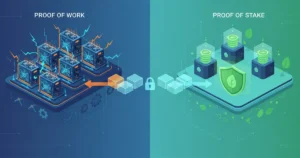
On September 15, 2022, Ethereum completed The Merge. It switched from energy-hungry Proof of Work mining to Proof of Stake. This was the most significant technical upgrade in Ethereum’s history at the time.
From Energy-Hungry Mining to Staking
Before The Merge, Ethereum used the same mining process as Bitcoin. Powerful computers competed to solve puzzles, consuming massive amounts of electricity. After The Merge, energy consumption dropped by approximately 99.95%. If you want the full breakdown, I’ve written about the PoW vs PoS debate separately.
As Vitalik Buterin’s blog puts it: “Intermediary minimization is a core principle of non-ugly cypherpunk ethereum.” The shift to staking was part of that vision. Fewer middlemen. Less waste. More participation.
Staking ETH and Earning Rewards
Now, instead of miners, validators secure the network by staking ETH. Over 30 million ETH is currently staked. That’s about 25% of the total supply locked up and earning rewards.
Solo staking requires 32 ETH (a significant barrier). But liquid staking services like Lido and Rocket Pool let you stake any amount. Current rewards run roughly 3-5% APY depending on network conditions.
Ethereum in 2025: What the Pectra Upgrade Actually Changed
The Pectra upgrade launched on May 7, 2025, and it’s the most significant change to Ethereum since The Merge. Here’s what actually matters:
- Doubled L2 blob capacity: From 3 to 6 blobs per block (via Ethereum Improvement Proposals EIP-7691). This significantly reduced fees for Layer 2 rollups.
- Account abstraction: You can now pay gas fees in USDC, DAI, or other tokens. No more needing ETH in your wallet just to move stablecoins.
- Wallet growth: Ethereum now has over 127 million active wallets, a 22% year-over-year increase.
Ethereum also holds $82.1 billion in stablecoins, representing 60% of the total stablecoin market. That’s institutional-level dominance. These numbers tell you where the smart money is building.
Should You Invest in Ethereum? The Honest Answer
I’m not going to tell you to buy ETH. I’m not your financial advisor, and I don’t know your situation. What I will do is lay out the landscape honestly.
The bull case is strong. Ethereum has unmatched network effects, the largest developer community, and institutional adoption that keeps growing. ETH has genuine utility. You need it to use the network, you can stake it for yield, and it serves as collateral across DeFi.
But the risks are real:
- Competition: Solana, Avalanche, and newer L1 blockchains are faster and cheaper on the base layer
- Regulatory uncertainty: Governments are still figuring out how to classify and regulate crypto assets
- Smart contract risk: Bugs in code have led to billions in losses across the ecosystem
- L2 fragmentation: Liquidity split across multiple Layer 2 chains can create complexity
My personal take? Ethereum is the backbone of crypto’s application layer. That doesn’t make it a guaranteed investment. It makes it something worth understanding deeply before putting money in.
The Mistakes I Made With Ethereum (So You Don’t Have To)
I’m sharing these because I wish someone had warned me. Learn from my expensive education:
First, I bought ETH on a centralized exchange and left it there for nearly two years. I didn’t move it to a crypto wallet. I missed out on staking rewards, airdrop eligibility, and the basic security of self-custody. Not my keys, not my crypto. I’d heard the phrase a hundred times but didn’t internalize it until I watched an exchange freeze withdrawals during a market crash.
Second, those $80+ gas fees I mentioned? I could have avoided most of them by using Layer 2 networks. But I ignored L2s for way too long because they seemed complicated. They’re not. They’re just cheaper versions of Ethereum with the same security guarantees.
Third, I confused ETH the asset with Ethereum the network. That confusion led me to treat it like a pure speculation play rather than understanding its fundamental value as infrastructure. Once I started using DeFi protocols, staking, and actually interacting with the network, my investment thesis changed completely.
Where to Go From Here
Ethereum is a rabbit hole. The more you learn, the more you realize there is to learn. If you’re just getting started, I’d suggest reading up on how to buy your first cryptocurrency and then actually interacting with the Ethereum network through a wallet.
If you found this guide useful, check out my deeper dives on DeFi, crypto staking, and Layer 2 networks. Each one builds on what we covered here.
The crypto space moves fast, but Ethereum’s role as the foundation of decentralized applications isn’t going anywhere. Whether you invest or not, understanding how it works puts you ahead of 95% of people talking about it.