How to Rebalance a Crypto Portfolio (The Strategy That Saved Me from 80% Altcoin Overexposure)
Learn how to rebalance a crypto portfolio with threshold-based strategies, tax-loss harvesting tips, and step-by-step examples. Data shows 78% outperformed HODL in 2018.

In this article
If you’ve ever watched a single altcoin balloon from 18% of your portfolio to over 80%, you know the sickening feeling when it snaps back. I lived that exact nightmare during the 2021 bull run with SOL. Learning how to rebalance a crypto portfolio is the single most important skill that separated my “degen phase” from my “actually building wealth” phase. It’s not sexy. It won’t make you rich overnight. But it might save you from giving back every dollar you made.
Before you can rebalance anything, you need a target to rebalance toward. If you haven’t set one yet, start with our guide to building a crypto portfolio allocation strategy. Once you have your target percentages locked in, this guide walks you through the rest.
What Is Crypto Portfolio Rebalancing (And Why It Matters)
Portfolio rebalancing means selling assets that have grown beyond your target allocation and buying assets that have shrunk below it. You’re returning your portfolio to the percentages you originally chose.
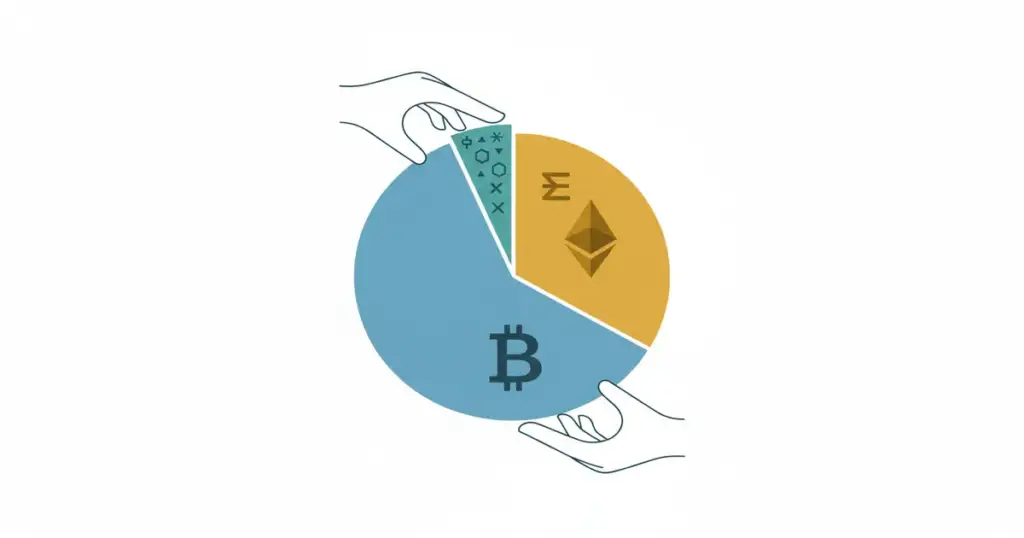
Here’s why it matters: crypto is absurdly volatile. A 50% BTC, 30% ETH, 20% altcoin portfolio can drift to 25% BTC, 15% ETH, 60% altcoin in a single quarter. When that happens, your carefully planned diversification is gone. You’re now running a concentrated bet whether you meant to or not.
I remember checking my portfolio in November 2021. My SOL position had exploded from an 18% allocation to roughly 82% of my entire portfolio. I felt like a genius. Three months later, SOL had dropped over 60% and dragged my whole portfolio down with it. That’s when I finally got serious about rebalancing.
Why You Should Rebalance Your Crypto Portfolio
Rebalancing isn’t about maximizing returns. It’s about managing risk while still capturing upside. Here’s what the data actually shows:
- Forced profit-taking: Rebalancing makes you sell winners before they reverse. It removes emotion from the equation and automates taking profits from your winners.
- Crash protection: During the 2018 crypto crash, 78.67% of rebalanced portfolios outperformed buy-and-hold according to the Crypto Research Report.
- Better risk-adjusted returns: According to VanEck’s research on optimal crypto allocation, a portfolio of 3% BTC and 3% ETH combined with 57% S&P 500 and 37% U.S. Bonds delivered the highest return per unit of risk.
- Volatility harvesting: You’re systematically buying low and selling high across different assets. Over time, this compounds.
The Yale Endowment model showed that adding just 7% Bitcoin allocation increased annualized returns from 6.8% to 18.8%. But those returns only hold if you rebalance to maintain that 7% target.
When to Rebalance Your Crypto Portfolio (Threshold vs Periodic)
There are three main approaches. Each has trade-offs worth understanding.
Threshold-Based Rebalancing (Recommended for Crypto)
You set a drift percentage. When any asset drifts beyond that threshold from its target, you rebalance. Research from Shrimpy found that a 15% threshold is the statistical sweet spot, delivering 77.1% outperformance versus simple buy-and-hold.
Example: If your BTC target is 40% and it hits 55% (a 15-percentage-point drift), you sell BTC and buy underweight assets.
Periodic Rebalancing (Calendar-Based)
You rebalance on a fixed schedule regardless of drift. Monthly or quarterly are the most common. This is simpler but less responsive. You might rebalance when drift is only 2%, wasting money on fees and taxes for minimal benefit.
Hybrid Approach (Best of Both Worlds)
This is what I actually use. Set quarterly calendar reviews, but add a 20% threshold override. If something moves dramatically between reviews, you act. Otherwise, you wait for your scheduled check-in. It keeps you disciplined without being rigid.

How to Rebalance a Crypto Portfolio (Step-by-Step)
Quick Summary
Review targets → Calculate current percentages → Identify drift → Calculate trades → Execute (tax-smart) → Document everything.
Step 1: Review Your Target Allocation
Pull up your original allocation plan. If you don’t have one written down, this is your first problem. Write it down now. Mine looks like this: 40% BTC, 30% ETH, 20% select altcoins, 10% stablecoins.
Step 2: Calculate Current Allocation Percentages
Log into your exchange or use one of the portfolio tracking tools I’ve reviewed. Add up total portfolio value, then divide each asset’s value by the total. Simple math, but you’d be surprised how many people skip this step and just eyeball it.
Step 3: Identify Drift (What’s Overweight and Underweight)
Compare your current percentages to your targets. Anything above target is overweight. Anything below is underweight. Focus on the biggest gaps first.
Step 4: Calculate Rebalancing Trades
Multiply your total portfolio value by each target percentage. That’s where each asset should be in dollar terms. Subtract current value from target value. Negative numbers mean sell. Positive numbers mean buy.
Step 5: Execute Trades (Starting with Tax Strategy)
Before you start clicking buttons, think about taxes. Sell losers first to harvest tax losses. When buying back into underweight assets, consider dollar-cost averaging to spread purchases over a few days if the position is large.
Step 6: Document for Tax Purposes
Record every trade: date, asset, amount, price, fees, and whether it was a gain or loss. Your future self at tax time will thank you. Use crypto tax software to automate this tracking.
Crypto Portfolio Rebalancing Example (Real Numbers)
Let’s walk through a realistic scenario so this isn’t abstract.
Starting Portfolio ($10,000)
| Asset | Target | Current | Dollar Value |
| BTC | 40% | 32% | $3,200 |
| ETH | 30% | 28% | $2,800 |
| SOL | 20% | 35% | $3,500 |
| Stablecoins | 10% | 5% | $500 |
SOL is overweight by 15 percentage points. That triggers our threshold. Here are the trades:
- Sell $1,500 worth of SOL (bringing it from $3,500 to $2,000, or 20%)
- Buy $800 more BTC (bringing it from $3,200 to $4,000, or 40%)
- Buy $200 more ETH (bringing it from $2,800 to $3,000, or 30%)
- Add $500 to stablecoins (bringing it from $500 to $1,000, or 10%)
Factor in trading fees (typically 0.1%-0.5% per trade) and potential tax on SOL gains before executing.
Tax Implications of Rebalancing (What I Wish I’d Known)
This is the part nobody talks about until it’s too late. I learned the hard way when my first rebalance triggered a 37% short-term capital gains tax bill. I’d held those positions for less than a year and didn’t even think about it.
Short-Term vs Long-Term Capital Gains
According to Charles Schwab’s guide to cryptocurrency taxes, the difference is significant:
- Short-term (held under 1 year): Taxed as ordinary income, up to 37%
- Long-term (held over 1 year): Taxed at 0%, 15%, or 20% depending on income
If possible, time your rebalancing so you’re selling assets held longer than one year. This single strategy can cut your tax bill in half.
Tax-Loss Harvesting During Rebalancing
When rebalancing, always sell your losers first. Those realized losses offset your gains from selling winners. If your ETH position is down but your SOL position is up, sell both. The ETH loss reduces the tax on your SOL gain.
Form 1099-DA and Reporting Requirements 2025
Starting in 2025, crypto brokers are required to report transactions via Form 1099-DA. This means the IRS will know about your rebalancing trades. Keep clean records. The IRS guidance on virtual currency transactions lays out what’s required. Don’t wing it.
Tools to Automate Crypto Portfolio Rebalancing
You don’t have to do all this manually. Here’s the spectrum from simple to sophisticated:
- Spreadsheet + exchange: Free, full control, but time-consuming. This is how I started.
- Portfolio trackers with alerts: Tools that notify you when drift hits your threshold. I’ve tested the best portfolio tracking tools that include drift alerts.
- Shrimpy: Built specifically for long-term portfolio rebalancing. Set your targets and thresholds, and it executes automatically.
- 3Commas: Better for active traders who want rebalancing as part of a broader strategy.
The trade-off is always control versus convenience. Automated tools save time but add platform risk and fees. I use a hybrid: automated alerts with manual execution.
Common Crypto Rebalancing Mistakes to Avoid
- Rebalancing too frequently: Every trade costs fees and creates a tax event. Don’t rebalance for a 2% drift.
- Ignoring taxes entirely: I’ve seen people rebalance aggressively and then get crushed by a surprise tax bill in April.
- Emotional rebalancing: Panic-selling during a crash isn’t rebalancing. Neither is FOMO-buying during a pump. Managing your emotions is critical to making this work.
- Forgetting transaction fees: On smaller portfolios, fees can eat 1-3% of each rebalancing trade.
- Too many small positions: If you hold 15 different altcoins, rebalancing becomes a nightmare. Keep it to 4-6 core positions.
- Selling right before the 1-year mark: If an asset is 10 months old and you’d save thousands by waiting 2 more months, wait.
When NOT to Rebalance Your Crypto Portfolio
This is the contrarian section, and it’s important. Rebalancing isn’t always the right move.
- High gas fee periods: If Ethereum gas fees are spiked, wait for cheaper execution windows.
- Massive short-term tax exposure: If rebalancing would trigger a five-figure tax bill on short-term gains, consider waiting for long-term treatment.
- Small drift within tolerance: If your allocation is off by 3%, leave it alone. Don’t micromanage.
- Strong conviction with a plan: Sometimes letting a winner run makes sense, but only if you’ve set a specific exit target. “I’ll let SOL run to 30% but sell at 35%” is a plan. “It keeps going up so I’ll just hold” is not.
Final Thoughts: Rebalancing Is About Risk Management, Not Maximum Returns
I’ll be honest. If I had never rebalanced my SOL position in late 2021, I would have made more money on the way up. But I also would have lost far more on the way down. Rebalancing isn’t designed to make you the most money possible. It’s designed to keep you in the game long enough to compound.
My advice? Start simple. Set a quarterly review on your calendar. Pick a 15% threshold. Write your target allocation down somewhere you’ll actually look at it. Then follow the rules even when your gut says otherwise. Especially when your gut says otherwise.
If you’re just getting started with crypto investing, these related guides will help you build a solid foundation:
- Build your starting framework with our crypto portfolio allocation strategy guide
- Learn systematic buying with our dollar-cost averaging walkthrough
- Master the mental game with our guide to managing your emotions in volatile markets