What Is Shiba Inu (SHIB): The Meme Coin That Built an Ecosystem
What is Shiba Inu (SHIB)? Learn how this Ethereum meme coin evolved into a DeFi ecosystem with Shibarium L2, ShibaSwap DEX, and a deflationary burn model.

In this article
If you’ve ever wondered what is Shiba Inu SHIB crypto, you’re asking the right question — and probably about five years late. SHIB started as a joke, became a 2021 phenomenon, and has quietly evolved into something most casual observers haven’t caught up with: a full DeFi ecosystem with its own Layer-2 blockchain, decentralized exchange, and a burn mechanism that actually shrinks supply. It’s still one of the most well-known meme coins on the market, but calling it “just a meme” in 2026 is like calling Bitcoin “just internet money” in 2017. I’m going to walk you through what SHIB actually is, how the ecosystem works, and the brutal math that explains why it will never hit $1.
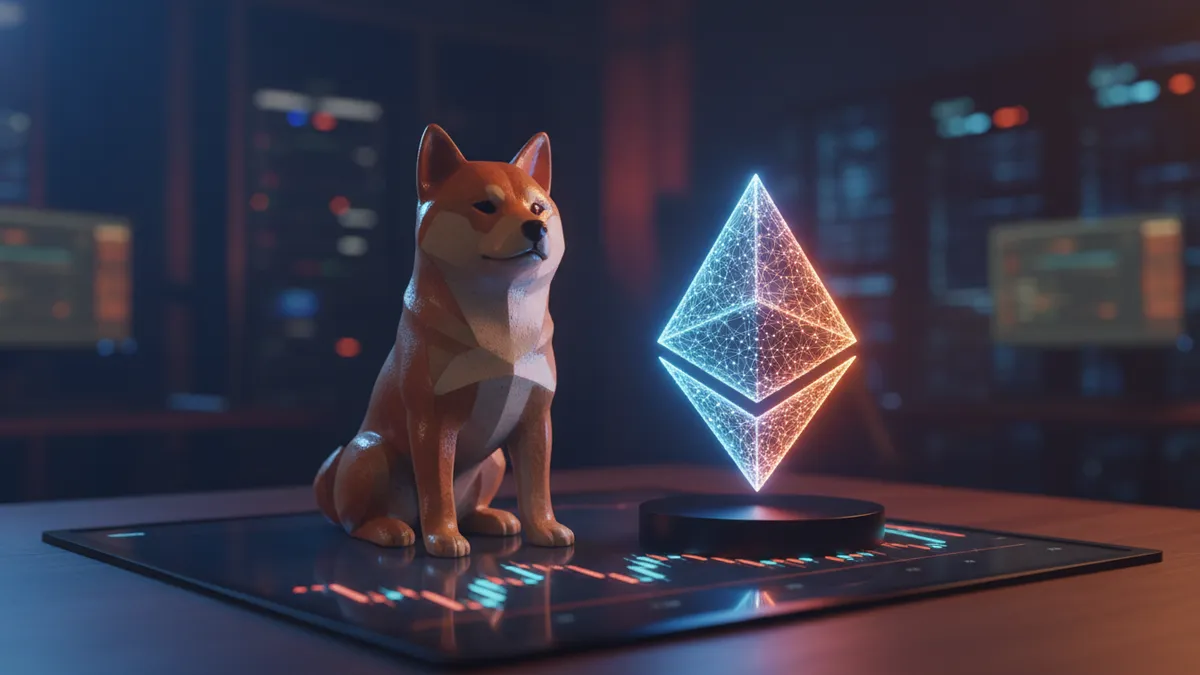
Quick answer: Shiba Inu (SHIB) is an ERC-20 token launched in August 2020 by an anonymous developer known as Ryoshi. It runs on Ethereum, has its own Layer-2 (Shibarium), its own DEX (ShibaSwap), and a three-token economy (SHIB, LEASH, BONE). It’s a high-risk satellite asset — not a core holding.
The Origin Story: How an Anonymous Developer Launched a Movement
In August 2020, a pseudonymous developer calling themselves “Ryoshi” deployed an ERC-20 token called Shiba Inu. They minted 1 quadrillion tokens — yes, with a “q” — locked 50% of the supply in a Uniswap liquidity pool, and then did something genuinely strange: they sent the other 50% to Vitalik Buterin’s wallet.
The logic was almost philosophical. If Vitalik held half the supply, the project couldn’t be a rug pull. Either Vitalik would hold and add legitimacy, or he’d do something dramatic. He did the dramatic thing.
In May 2021, Vitalik burned 410 trillion SHIB — roughly $6.7 billion at the time — by sending them to a dead wallet. Then he donated another 50 trillion (worth about $1 billion) to India’s COVID-19 Relief Fund. Overnight, SHIB went from “weird Doge clone” to a coin with the most legitimate origin story in meme coin history.
I remember scrolling Crypto Twitter that week and dismissing the whole thing. I was three years into my own recovery from a leveraged-trading disaster, and I had this hard rule: if it has a dog on it, I don’t touch it. SHIB proceeded to do roughly a 1000x over the next several months. I sat there feeling very smart and very poor. Lesson learned — but I’ll come back to that.
Ryoshi, by the way, vanished permanently in May 2022. They deleted their social media, wiped their blog, and left the project in the hands of the community. The SHIB ecosystem has been fully community-governed ever since.
Understanding the SHIB Token: Supply, Burns, and What Makes It Tick
Here’s where most articles get lazy and just describe SHIB as “a token.” It’s not. It’s part of a three-token system, and if you don’t understand the tokenomics, you’re flying blind.
The Three-Token Ecosystem: SHIB, LEASH, and BONE
- SHIB: The community token. Burnable, tradeable, and stakeable (the SHIB community calls staking “burying”). When you bury SHIB, you receive xSHIB and earn rewards in BONE.
- LEASH: The loyalty token. It started life as a rebase token pegged to Dogecoin and was redesigned into a fixed-supply reward asset. Stakers receive xLEASH and earn BONE plus more LEASH. LEASH holders often get early access to new ecosystem launches.
- BONE: The governance token. Fixed supply cap of 250 million. BONE powers the Doggy DAO, which votes on Shibarium upgrades and treasury decisions. It’s also used as the gas token on Shibarium.
So SHIB isn’t just a meme. It’s the entry point into a multi-token economy that handles trading, staking, governance, and L2 gas. That’s a lot more infrastructure than people give it credit for.
The Burn Mechanism: How Shibarium Shrinks the Supply
The single biggest knock on SHIB is the supply: 589 trillion tokens in circulation as of May 2026. That’s a number so large your brain refuses to process it. The team’s answer is the burn mechanism.
Every transaction on Shibarium — SHIB’s Layer-2 — burns 70% of the fee in SHIB by converting BONE gas fees and sending the proceeds to a dead wallet. With Shibarium processing over a million transactions per day, this creates a constant, modest deflationary pressure on supply.

One bullish signal worth noting: exchange reserves of SHIB hit a record low of 80.9 trillion tokens in March 2026, and that same month the SEC and CFTC jointly classified SHIB as a digital commodity. Long-term holders are pulling tokens off exchanges, and U.S. regulators just gave SHIB the same legal category as Bitcoin. That’s not nothing.
ShibaSwap: The Decentralized Exchange at the Heart of SHIB’s Ecosystem
ShibaSwap launched in 2021 as the project’s native decentralized exchange. It’s not trying to compete with Uniswap on volume — it’s trying to be the central hub of the SHIB economy.
On ShibaSwap, you can:
- Trade: Swap SHIB, LEASH, BONE, and other ERC-20 tokens directly from your wallet.
- Bury (stake): Lock SHIB, LEASH, or BONE to earn ongoing rewards. This is the project’s flavor of liquid staking, with receipt tokens (xSHIB, xLEASH, xBONE) representing your position.
- Dig: Provide liquidity to liquidity pools and earn BONE rewards on top of trading fees.
ShibaSwap is what moves SHIB out of pure speculation territory and plants it inside the broader DeFi ecosystem. You can argue about whether the volume justifies the design, but the design itself is serious DeFi infrastructure. The Shiba Inu official site has the up-to-date docs if you want to go deeper.
Shibarium: SHIB’s Layer-2 Blockchain
This is the development that turned me from a SHIB skeptic into a SHIB respecter. Shibarium is an Ethereum Layer-2 that launched in August 2023 and, as of 2026, has processed over 1.5 billion cumulative transactions across roughly 294,000 unique accounts.
The key upgrades that matter:
- Shibarium 2.0 (early 2026): Sub-second finality and meaningfully higher throughput — pushing the network closer to ~200 TPS in real usage.
- FHE privacy layer (Q2 2026): Fully homomorphic encryption enabling private transactions on a public L2. This is genuinely cutting-edge tech.
- Built-in burns: 70% of fees are converted to SHIB and burned, creating ongoing deflationary pressure on the parent token.
If you want the technical details straight from the source, the Shibarium Layer-2 network docs are a solid starting point.
SHIB vs. Dogecoin: Same Meme, Very Different Architecture
People love to lump SHIB and Dogecoin (DOGE) together. They shouldn’t. Architecturally, they’re not even close.
| Feature | Dogecoin (DOGE) | Shiba Inu (SHIB) |
|---|---|---|
| Chain | Own PoW blockchain | ERC-20 on Ethereum + Shibarium L2 |
| Throughput | ~33 TPS | ~200 TPS via Shibarium |
| Supply | Inflationary, no cap | Deflationary via burns |
| Use Case | Payments and tipping | DeFi, staking, governance |
| Endorsements | Backed publicly by Elon Musk | Community-only, no public figurehead |
DOGE is, in spirit, a digital tip jar. SHIB is trying to be infrastructure. Whether SHIB succeeds at that is a separate question, but the comparison itself isn’t close.
The Real Risks of Investing in Shiba Inu
This is where I get blunt, because most articles won’t. Here’s the honest math.
The $589 Trillion Problem (Why SHIB Will Never Reach $1)
You see the “SHIB to $1” memes everywhere. Let’s kill that fantasy with one calculation. SHIB has a circulating supply of roughly 589 trillion tokens. For SHIB to reach $1.00, its market cap would need to hit approximately $589 trillion.
For reference, that’s about six times the entire global GDP. It’s roughly five times the value of all real estate on Earth. It is not going to happen. Ever. In any realistic universe.
A more plausible — though still extreme — bull case is $0.001, which would require a market cap around $589 billion. That’s roughly half of Bitcoin’s market cap at recent highs. Not impossible. But you need to internalize that the difference between $0.000006 and $0.001 is a 160x. Sizing a bag accordingly is the entire game.
Volatility, Sentiment, and the Meme Coin Trap
The other risks are real and worth respecting:
- Whale concentration: A handful of wallets can move price drastically. Always have been, always will.
- Sentiment-driven price action: SHIB tracks Crypto Twitter mood more than fundamentals. That cuts both ways.
- Burn rate is modest: 589 trillion is a big number to chip away at. Burns matter at the margin, not in days or weeks.
- Competition: PEPE, FLOKI, BONK, and a dozen others fight for the same speculative attention.
- Regulatory tailwinds, not guarantees: The 2026 commodity classification helps, but regulation can still bite.
“Shiba Inu is best approached as a high-risk satellite asset — if you allocate to it at all, limit it to 2–5% of a diversified portfolio alongside Bitcoin, Ethereum, or stablecoins.” — TradingKey Analysts, Strategic Outlook 2026
How to Think About SHIB in a Portfolio
Here’s the part where I get to use my favorite analogy. Back when I played live poker semi-seriously — mostly $1/$2 no-limit at a card room I won’t name in Phoenix — I had a rule for chasing draws: never put in chips I couldn’t lose without it affecting my next session. SHIB is a draw. A pretty one with decent equity, but still a draw.
If you’re going to hold SHIB, treat it the way you’d treat a lottery ticket inside a real portfolio allocation strategy — small, defined, written down in your trading journal. My personal cap on any single meme coin is 3% of my crypto allocation. That’s not advice; that’s me being honest about how I size things after blowing up an account a decade ago.
The mechanics:
- Size like a lottery ticket: Only risk what you can lose entirely and not flinch.
- Define your invalidation: Pick a price or thesis change that gets you out. Write it down.
- Stake instead of staring at charts: If you’re holding anyway, burying SHIB on ShibaSwap earns BONE rewards while you wait.
- Re-read your position sizing rules monthly: Bull markets erode discipline. Catch it before it costs you.
Frequently Asked Questions
Is Shiba Inu a good investment in 2026?
It’s a high-risk, high-volatility satellite asset. The 2026 SEC/CFTC commodity classification and Shibarium adoption are positive signals, but the supply problem is real. Treat it like a small portfolio bet, not a retirement plan.
Can SHIB reach $1?
Not in any realistic scenario. To reach $1, SHIB would need a market cap of roughly $589 trillion — about six times the entire global GDP. A more plausible ceiling for an extreme bull case is around $0.001, which is still a ~160x from current prices.
What’s the difference between SHIB, LEASH, and BONE?
SHIB is the main community/utility token. LEASH is a fixed-supply loyalty token with staking rewards and early access perks. BONE is the governance token for the Doggy DAO and the gas token for the Shibarium network.
How does the SHIB burn mechanism work?
Shibarium burns 70% of transaction fees by converting them into SHIB and sending the tokens to a dead wallet. With over a million daily transactions, this creates an ongoing — though modest — deflationary pressure on the 589 trillion circulating supply.
Is SHIB the same as Dogecoin?
No. DOGE is on its own proof-of-work blockchain and is built for payments. SHIB is an ERC-20 token on Ethereum with its own Layer-2 (Shibarium), a DEX (ShibaSwap), and a multi-token DeFi ecosystem. The meme is the same; the architecture isn’t.
Final Thoughts
SHIB is a strange, fascinating asset. It’s part meme, part DeFi infrastructure, part community experiment in what happens when an anonymous developer hands a project to the internet and walks away. I dismissed it in 2021 and missed a generational move. I’m not going to make the opposite mistake and overweight it now because of FOMO.
If you’re new to evaluating projects like this, the best favor you can do yourself is learn how to research crypto projects before investing — before you put a single dollar into anything dog-themed. Read the docs. Check the tokenomics. Map the unlocks. Size the position. Then, and only then, decide what you’re comfortable losing.
SHIB might be infrastructure with a dog mascot. Or it might be a meme that ran out of runway. Both outcomes are still on the table. Your job isn’t to be right — it’s to make sure you survive being wrong.