What Is a DAO in Crypto: How Decentralized Governance Actually Works
What is a DAO in crypto? Learn how decentralized autonomous organizations work, real examples, governance token risks, and whether joining one is worth it.

In this article
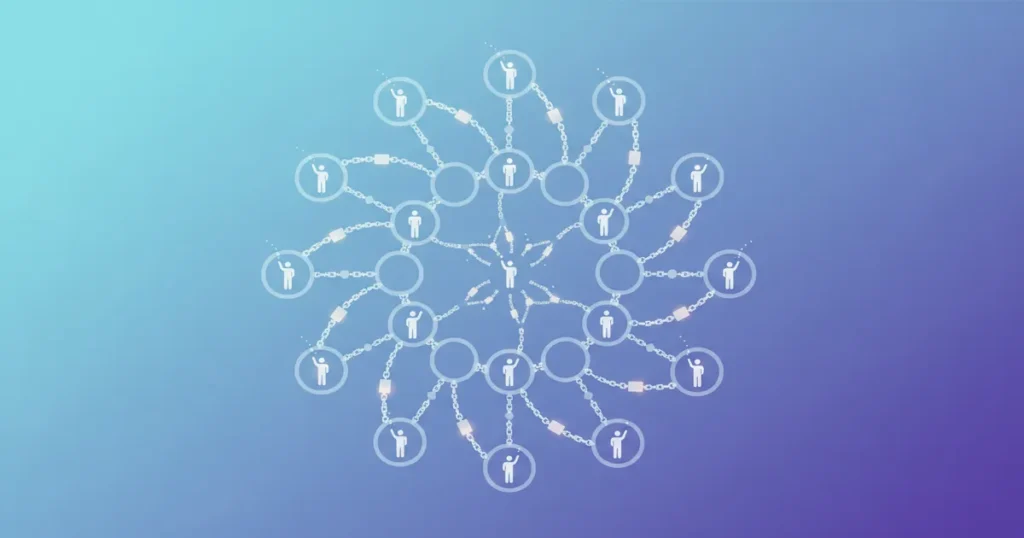
If you’ve spent any time in crypto, you’ve seen the acronym everywhere. But what is a DAO in crypto, really? Not the marketing pitch. Not the utopian vision. The actual mechanics of how thousands of strangers coordinate billions of dollars without a CEO, a board room, or even a company name on the door.
I’ve been watching DAOs evolve since 2016 — including the spectacular collapse that nearly killed the concept before it started. After years of participating in governance votes, reading proposals at 2 AM, and watching whale wallets swing entire protocol decisions, I have opinions. Strong ones.
A decentralized autonomous organization is one of the most ambitious experiments in decentralized finance (DeFi). But it’s also one of the most misunderstood. Let’s break it down honestly.
What Does DAO Stand For?
DAO stands for Decentralized Autonomous Organization. No CEO. No headquarters. No HR department sending passive-aggressive emails about the kitchen microwave. Instead, the rules are encoded in smart contracts running on a blockchain technology network.
Members hold governance tokens that give them voting rights. The more tokens you hold, the more weight your vote carries. Think of it like owning shares in a company — except the “company” has no legal entity, no office, and the shareholders’ meeting happens on Discord.
The concept isn’t new. The first major DAO — literally called “The DAO” — launched on Ethereum in April 2016. It raised $150 million from over 11,000 participants in weeks. I remember refreshing the fundraise page and thinking this was either the future of organizations or the most expensive social experiment in history. Turns out, it was both.
Two months later, an attacker exploited a vulnerability in the code and drained $70 million worth of ETH. That hack didn’t just destroy The DAO. It split the entire Ethereum blockchain in two — creating Ethereum Classic as a permanent reminder of what went wrong.
How a DAO Actually Works
Forget the hype. Here’s the plumbing behind DAO governance.
Smart Contracts Run the Rules
Every DAO runs on smart contracts. These are self-executing programs on the blockchain that enforce the organization’s rules automatically. When a vote passes, the smart contract executes the decision. No middleman. No committee approval. No “we’ll circle back next quarter.”
This is what makes DAOs different from a group chat with a shared wallet. The code is the authority. And since it runs on-chain, anyone can audit the rules at any time.
Governance Tokens and Voting Power
Governance tokens are your ticket to participate. UNI for Uniswap. MKR for MakerDAO. AAVE for Aave. The tokenomics of these governance tokens determine who actually controls the DAO — and that distribution matters more than most people realize.
Holding governance tokens is a bit like staking your claim in the protocol’s future. But here’s the uncomfortable truth: most people buy these tokens purely for price speculation. They never vote on a single proposal.

The Proposal and Voting Process
Here’s how a typical DAO decision flows:
- Discussion: Someone posts an idea in the governance forum (usually Discourse)
- Temperature check: Off-chain vote on Snapshot — gas-free, just to gauge interest
- Formal proposal: If support is strong, a formal on-chain proposal goes live
- Voting period: Token holders vote during a set window (usually 3-7 days)
- Execution: If the proposal meets the quorum and passes, smart contracts execute it automatically
Snapshot is a game-changer here. It lets members vote off-chain without paying gas fees. Before Snapshot, voting on Ethereum could cost $50-100 in gas — which meant only whales bothered participating. That’s a governance problem I’ve seen firsthand.
Types of DAOs in Crypto
Not all DAOs do the same thing. The ecosystem has evolved into several distinct categories:
- Protocol DAOs: Govern DeFi protocols like Uniswap, Aave, and Compound. They control parameters like liquidity pools, interest rates, and fee structures.
- Investment DAOs: Function like decentralized venture capital funds. Members pool capital and vote on which projects to fund.
- Grant DAOs: Fund open-source development and ecosystem growth. Gitcoin pioneered quadratic funding — a method that amplifies small contributions to reduce whale dominance.
- Service DAOs: Provide legal, creative, or technical services to other crypto projects.
- Social DAOs: Community-focused organizations where membership is gated by NFTs or tokens. Less about governance, more about belonging.
The protocol DAOs are where the serious money lives. And when I say serious, I mean billions in total value locked (TVL) governed by token holder votes.
Real-World DAO Examples You Should Know
Let’s look at the DAOs that actually matter — the ones managing real treasuries and making real decisions.
Uniswap DAO
Uniswap is the largest decentralized exchange (DEX) by volume, and its DAO controls a treasury of approximately $5.4 billion. That number sounds massive, but context matters — most of it is denominated in UNI tokens. If everyone sold at once, that number would evaporate fast.
UNI holders vote on fee switches, grant allocations, and protocol upgrades. But here’s the thing: Uniswap Labs, the company that built the protocol, still wields enormous informal influence. The “decentralized” part has asterisks.
MakerDAO (Now Sky)
MakerDAO governs the DAI stablecoin — one of the most important pieces of DeFi infrastructure. MKR token holders vote on collateral types, stability fees, and risk parameters. It recently rebranded to “Sky,” though the community still mostly calls it Maker.
I’ve always respected Maker’s governance model. It’s one of the few DAOs where votes have genuine, immediate financial consequences. Get collateral requirements wrong, and the stablecoin loses its peg. Stakes don’t get much higher than that.
Arbitrum DAO
Arbitrum is a Layer 2 scaling solution for Ethereum. Its DAO manages a treasury of roughly $1.4-1.8 billion and governs the rollup’s development roadmap. ARB token holders vote on protocol upgrades, grant funding, and ecosystem incentives.
Aave
Aave is a major lending and borrowing protocol. AAVE token holders decide which assets the protocol supports, set risk parameters, and manage the safety module. It’s DeFi governance at its most technical — you genuinely need to understand credit risk to vote intelligently here.
Combined, DAO statistics and market data 2025 show total DAO treasuries exceeded $35 billion by end of 2024. That’s real money governed by code and community votes.
The Problems With DAOs Nobody Talks About
I’ve been in enough governance forums to know the polished version of DAOs is exactly that — polished. Here’s what’s actually happening behind the curtain.
Whale Concentration
According to a ScienceDirect study on voting power concentration in DAOs, in many DAOs, fewer than 0.1% of token holders control roughly 90% of voting power. Let that sink in. We left traditional finance because a handful of people controlled everything — and then rebuilt the same power structure with different people.
I watched a major protocol vote get swung by a single wallet once. Three million dollars in governance tokens, deployed from a fresh address, just to push one proposal over the line. That’s not democracy. That’s plutocracy with extra steps.
“DAOs face a unique agency problem arising from large token holders, termed ‘whales,’ whose concentrated ownership interests may diverge from those of smaller token holders, resulting in governance vulnerabilities.” — Journal of Corporate Finance
Voter Apathy Is Rampant
Research covering 30,000 DAOs found that 53% were completely inactive — no proposals, no votes, nothing. In Decentraland’s DAO, average proposal participation was a stunning 0.79%. The median was even worse: 0.16%.
Most token holders simply don’t care about governance. They bought the token hoping the price goes up. Reading a 15-page proposal about fee parameter adjustments? Not exactly thrilling content for your average holder. I’ll admit, even I’ve skipped votes when the proposal was buried in technical jargon that required three hours of context to parse.
The DAO Hack of 2016
This is crypto history everyone should know. In June 2016, an attacker exploited a reentrancy vulnerability in The DAO’s smart contract and drained 3.6 million ETH — about $70 million at the time. The Ethereum community faced an impossible choice: let the theft stand (preserving “code is law”), or hard fork the blockchain to reverse it.
They chose the fork. And that’s how Ethereum Classic was born. CoinDesk’s account of The DAO hack and Ethereum hard fork captures just how chaotic those weeks were. I was glued to Crypto Twitter, watching Vitalik’s posts in real time, genuinely uncertain whether Ethereum would survive.
That hack taught me something I carry into every trade: smart contracts are only as good as their audits. And even audited code can have blind spots.
Legal and Regulatory Gray Zones
Here’s a risk most DAO guides skip entirely. In many jurisdictions, DAO members may face personal legal liability for the organization’s actions. If a DAO isn’t structured as a legal entity, courts might treat members as a general partnership — meaning you’re personally on the hook.
The SEC has also flagged governance tokens as potential securities. If your governance token passes the Howey Test, holding it could put you in regulatory crosshairs. And that’s before we even get into the risk of flash loan governance attacks, where someone borrows millions in tokens, forces through a malicious proposal, and returns the tokens — all in a single transaction.
You can verify much of this yourself through on-chain data. Real governance participation rates are publicly visible, and they tell a sobering story.
Should You Participate in a DAO?
Honestly? It depends on why you’re interested.
DAO participation makes sense if you:
- Genuinely use and care about the protocol
- Understand the technical proposals being voted on
- Have enough tokens to matter — or are willing to build reputation through forum contributions
- Want to help shape DeFi governance rather than just watch from the sidelines
If you’re buying governance tokens purely for price speculation, that’s fine — just be honest about it. Most proposals are deeply technical or financial. Voting without understanding what you’re approving is worse than not voting at all.
Small holders rarely swing outcomes. But I’ve seen community members with modest holdings build real influence through thoughtful forum posts, proposal analysis, and delegation. Governance isn’t just about token weight. Reputation matters too.
Snapshot voting is gas-free, so cost isn’t a barrier anymore. But on-chain execution for proposals you submit can cost real money, especially on Ethereum mainnet. Many DAOs have migrated governance execution to Layer 2 networks to reduce this friction.
How to Join a DAO
Ready to try it? Here’s the practical path — the part most guides skip.
5 Steps to Join a DAO
- Acquire the governance token: Buy on a centralized vs decentralized exchange — either works. You don’t need thousands of dollars worth. Even a small position gives you access.
- Join the community: Find the DAO’s Discord server and governance forum (usually hosted on Discourse). Lurk first. Read the room.
- Read active proposals: Check Snapshot for temperature checks and the governance forum for active discussions. Understand what’s being debated before you weigh in.
- Delegate your votes: If you don’t want to vote on every proposal, delegate your voting power to an active, trusted delegate. Many DAOs have public delegate platforms.
- Contribute: Many DAOs pay contributors in tokens for writing, coding, research, or community management. Yield farming governance participation is a real thing.
I’ll add one unofficial step: before you buy a single token, look at the DAO’s actual governance activity. How many proposals passed in the last six months? What’s the voter participation rate? If the forum looks like a ghost town, your governance token is really just a speculative asset — which is fine, but know what you’re holding.
The Future of DAOs
Despite all the problems I’ve outlined, I’m cautiously optimistic. The concept isn’t broken — the execution is just immature.
Wyoming’s DAO LLC structure and the Marshall Islands’ DAO legal framework are giving these organizations real legal footing. That matters more than most people think. Without legal clarity, DAOs are essentially unincorporated associations where every member is potentially liable.
Reputation-based voting is the development I’m most excited about. Quadratic voting — where voting power scales with the square root of tokens held — reduces whale dominance significantly. Some protocols are experimenting with identity verification to enable one-person-one-vote systems. It’s early, but it addresses the core plutocracy problem.
Cross-chain DAOs are becoming technically possible too, using wrapped tokens and bridge infrastructure. And in one of the more fascinating experiments, AI agents are starting to participate in DAO governance — submitting proposals, analyzing votes, and even delegating on behalf of human members.
The Ethereum Foundation’s official DAO resource is a solid starting point if you want to dig deeper into the technical foundations. DAOs are still early. Most are figuring out how to make governance work at scale. But the ones that solve these problems will fundamentally change how organizations operate.
If you’re just getting started in crypto, understanding DAOs is non-negotiable. They sit at the intersection of decentralized finance (DeFi), community ownership, and programmable governance. Even if MEV (maximal extractable value) and governance attacks remain risks, the trajectory is toward more transparent, more accountable organizations.
And honestly? After watching traditional finance operate behind closed doors for years, I’ll take messy, public governance over polished opacity any day of the week.
Want to keep building your crypto knowledge? Start with our guides on smart contracts and blockchain technology to understand the foundation DAOs are built on. The more you understand the infrastructure, the better you’ll navigate what’s being governed on top of it.