What Is Worldcoin (WLD): Sam Altman’s Biometric Crypto Project Explained
Learn how Worldcoin (WLD) uses iris scans to verify human identity, what World ID enables, how World Chain works, and the privacy risks you need to know.

In this article
So you want to know what is Worldcoin crypto, and you’ve probably seen the headlines — a shiny chrome orb scans your eyeball, then drops free tokens into your wallet. That’s the meme version. The real story is messier, more ambitious, and honestly more concerning than the marketing suggests. Worldcoin (now rebranded simply as “World”) is Sam Altman’s bet that as AI floods the internet with bots, proving you’re a real human becomes one of the most valuable digital primitives on the planet.
I’ve spent the last few months going down this rabbit hole, partly because the project sits at the exact intersection of AI and crypto I find fascinating, and partly because I had a personal run-in with bots that nearly cost me real money. We’ll get to that. First, let me actually explain the thing.
Quick answer: Worldcoin is a crypto project that uses iris scans to verify you’re a unique human, issues a privacy-preserving credential called World ID, and rewards verified users with WLD tokens on its own Ethereum Layer 2 called World Chain. It’s controversial because it collects biometric data — and several countries have banned it.
Why Worldcoin Exists: The Bot Problem No One Solved
Here’s the thesis in one sentence: as AI agents become indistinguishable from people online, proving you’re human becomes as valuable as money itself. That’s not my line — that’s the entire premise Sam Altman built the project around. And honestly, the more I work in crypto Twitter, the more I think he’s right about the problem (separate from whether his solution is the right one).
Quick personal story. Back when I was rebuilding my portfolio after blowing up my first account, I followed what looked like a respected trading signal account. Decent engagement, sharp-looking charts, a track record I could actually verify on a third-party tool. Three weeks in I noticed the responses to their posts were all from accounts that had been created within forty-eight hours of each other. The whole “community” was bots inflating credibility. I’d nearly sized into a position based on social proof that didn’t exist. That was 2023. The bots have only gotten better since.
This is the problem World is trying to solve with something called proof of personhood — a cryptographic credential that says “a unique human exists behind this account” without revealing who that human actually is. The same way Web3 identity infrastructure tries to move us away from centralized login systems, World wants to move us away from a future where every comment, review, and account might be an AI puppet.
The Four Pillars of the World Ecosystem
The thing most articles get wrong is treating Worldcoin like it’s just a token. It isn’t. It’s a stack of four pieces that only really make sense together. Here’s the breakdown.
The Orb: Your Eye Is Your Passport
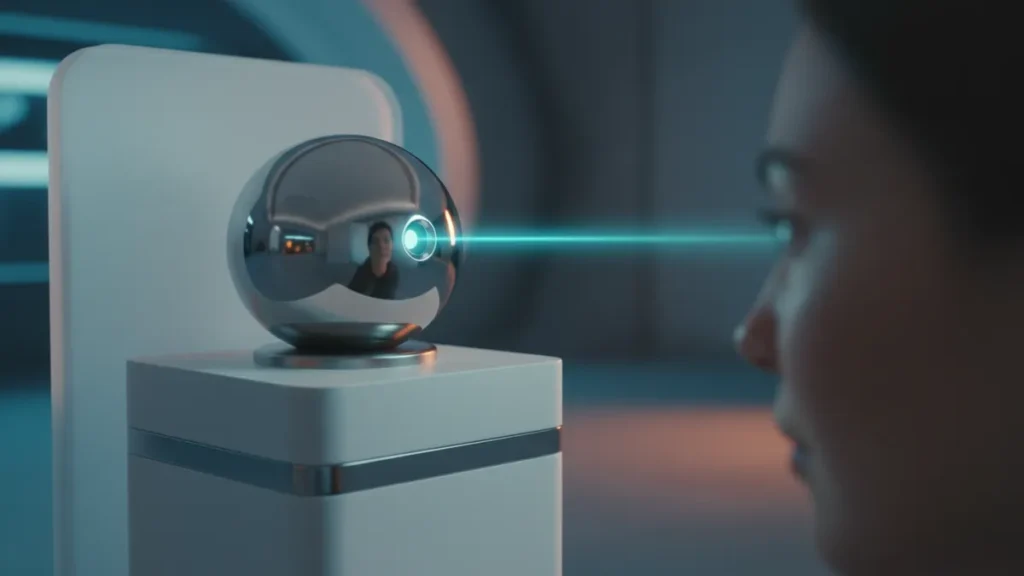
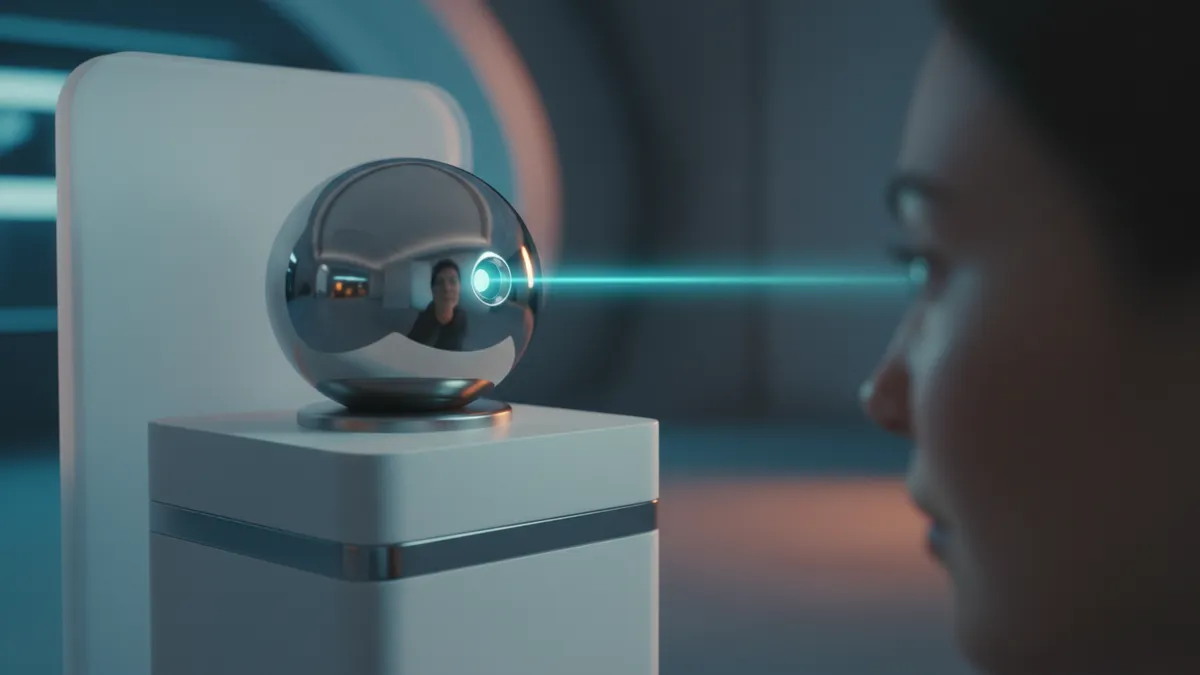
The Orb is a spherical metal device about the size of a bowling ball. You walk up, look into it, and for roughly thirty seconds it scans your iris in high resolution. It then converts that scan into a mathematical hash called an IrisCode. According to World, the original iris images are sent to your phone instantly and permanently deleted from the Orb itself — only the IrisCode is retained. The point of the IrisCode is uniqueness. Two humans can’t produce the same one.
The US launch happened in May 2025 with Orb locations in San Francisco, Los Angeles, Miami, Atlanta, Austin, and Nashville. Globally there are now 18 million verified humans across 160 countries.
World ID: Anonymous Proof That You’re Human
Here’s the clever part. Once you’re verified, World ID lets you prove you’re a unique human to any app or website — without revealing who you are or what your iris looks like. It does this using zero-knowledge proofs, a cryptographic technique that lets you prove a statement is true without revealing the underlying data. Same family of math that powers ZKsync and similar privacy-focused L2s.
So when you log into Tinder and flash your World ID badge, Tinder doesn’t get your iris data, your name, or your wallet. It just gets a yes/no: is this a verified unique human? That’s the elegance. Whether the implementation lives up to that promise is what the critics argue about, and we’ll get to them in a minute.

World App: The Wallet and Gateway
World App is a self-custodial mobile wallet that doubles as the gateway to everything. It holds your World ID credential, your WLD tokens, and provides access to a growing list of mini-apps built directly on World Chain. As of late 2025 it has over 38 million users, which is genuinely a lot for a crypto-native app. If you want broader DeFi exposure on Ethereum, you’d still want to set up a MetaMask wallet, but World App is the native experience.
World Chain: The Layer 2 Behind It All
World Chain is an Ethereum Layer 2 built on the Optimism OP Stack — the same stack that powers Base and OP Mainnet. What makes World Chain different is that verified humans get a free gas allowance. Bots don’t. That single design choice flips the economics of spam on its head — running a sybil attack on World Chain costs you, but using it as a human is essentially free for normal activity.
The rebrand from “Worldcoin” to just “World” happened in October 2024, signaling that the team sees this as identity infrastructure first and a token project second.
WLD Token: Who Gets It, What It Does, and the Inflation Problem
Now let’s talk about the token, because this is where most retail traders stop reading the docs and start opening positions. Don’t do that.
Tokenomics at a Glance
According to the official World Whitepaper Tokenomics docs, WLD has a max supply of 10 billion tokens distributed over 15 years. As of April 2025, circulating supply sat around 1.3 billion WLD, roughly 13% of total. That’s a lot of supply still locked, which matters for the next part.
How Verified Users Earn WLD
Once you’re Orb-verified, you can claim grants of roughly 40 WLD per month, directly into your World App wallet. This is, by user count, the largest free crypto distribution in history. Use cases for the token itself include gas on World Chain, governance voting, in-app payments, and a Visa-branded payment card that’s currently in development for spending WLD and other digital assets in the real world.
The 120% Inflation Warning
Here is the part nobody on Crypto Twitter wants to talk about honestly. The annualized inflation rate of WLD is currently around 120%. That means the circulating supply is roughly doubling year over year. For a token to maintain price under that kind of issuance, demand has to grow even faster. That’s a brutal headwind.
“Worldcoin is probably too risky for most retail investors to buy for now.” — Motley Fool analyst commentary
Some relief is coming. The token unlock rate is set to drop by 43% on July 24, 2026 — and crucially, that schedule is baked into immutable on-chain contracts, so it’s happening whether the team wants it to or not. That’s a real catalyst worth watching if you’re modeling out a thesis. Personally, I’d want to see at least two more inflation step-downs before I’d consider this anything other than a venture-style speculative bet.
Real-World Use Cases: Where World ID Is Actually Showing Up
This is the part that flipped my view from “interesting science project” to “okay, this might actually matter.” In April 2026, Rest of World’s report on World’s 2026 partnerships dropped, and the integration list is no joke.
- Tinder: Verified humans get a World ID badge on their profile plus 5 free Boosts per month. Direct response to the bot/catfishing problem on dating apps.
- Zoom: Deepfake protection via a three-way match between your iris, your face, and live video. Targeted at executive impersonation scams in business meetings.
- Docusign: Proof-of-human layer for document signing. Helps fight AI-forged signatures on legal docs.
- Razer: Adopting World ID as the standard for “human-first” gaming, mostly to gut bot economies in MMOs and competitive games.
- Concert Kit (Ticketmaster/Eventbrite): Artists can reserve a portion of tickets exclusively for verified humans, cutting out scalper bots.
- AgentKit + Coinbase: Launched March 2026 — AI agents can carry cryptographic proof they’re backed by a real human via Coinbase’s x402 standard.
- Okta: Enterprise identity tied to World ID for workforce verification.
That last one — AgentKit — is the development I think is most underrated. As AI agents start transacting on-chain autonomously, attributing them to a real human becomes a meaningful trust signal. It puts World in conversation with the broader AI crypto stack alongside projects like Bittensor (TAO), NEAR Protocol, and Render Network (RENDER).
The Controversy: Privacy Bans, Biometric Risk, and What Critics Say
Okay. Now the honest part. This project has very real critics, including some I take extremely seriously.
Countries That Said No
As of 2026, Worldcoin operations have been suspended or banned outright in Kenya, Brazil, the Philippines, Indonesia, Thailand, Spain, Portugal, Germany, South Korea, Hong Kong, and Colombia. The reasons vary, but the themes are consistent.
- Brazil (effective January 25, 2025): Banned the project from paying citizens for biometric data, which Brazilian regulators argued was inherently coercive.
- Kenya (ruling May 2025): Court found Worldcoin violated privacy rights and the country’s Data Protection Act.
- Philippines: Cease-and-desist citing local data law violations.
Time magazine’s coverage of Worldcoin dug deep into the early data collection practices, and the picture wasn’t flattering. The Electronic Frontier Foundation has also criticized the project for rushing biometric collection in developing countries where consent was, at best, uninformed.
What the Critics Get Right
“Even with the best privacy technology, a one-identity-per-person property brings several systemic risks.” — Vitalik Buterin, Ethereum co-founder
Vitalik’s full analysis is worth reading, but his core point is that even if the privacy tech is perfect, there are real downsides to a single global identity primitive — coercion (governments forcing you to use it), centralization of trust in the operator, and the irreversibility of biometric breaches.
Shady El Damaty, CEO of Holonym and a zero-knowledge cryptography expert, put it more bluntly: “The World Network’s centralized infrastructure makes it particularly vulnerable to data leaks and exploitation, with potentially catastrophic consequences given the project’s global reach.”
Here’s the part that keeps me up: irises, unlike passwords, cannot be changed if stolen. A breach of the IrisCode database — assuming an attacker could ever reverse the hashing — would be permanent and irreversible. It’s not like rotating a password. Your eye is your eye for life.
This is also the heart of the philosophical fight. Worldcoin pitches itself as decentralized identity, but its critics argue it’s just a privately-controlled version of the same surveillance infrastructure governments build with Central Bank Digital Currencies. I don’t fully buy that framing — World’s architecture is meaningfully different — but the concern about concentrated control of identity infrastructure is legitimate, and it deserves more honest discussion than the project’s defenders usually give it.
Should You Get Involved With Worldcoin?
This is the question I get most. There are actually two separate questions here, and people keep blurring them.
If You’re Considering Getting Orb-Verified
The personal cost is low if you trust the cryptography. You get free WLD, you can use World Chain with free gas, and you get a credential that’s already plugging into real apps. The risk is that you’re trusting a private organization with biometric data that cannot be revoked or changed. If their threat model is wrong, or if their infrastructure is ever compromised, that’s permanent.
I got Orb-verified in late 2025, purely as research. Will I regret it in ten years? I genuinely don’t know. I made the choice with eyes open, and I’m not going to pretend otherwise.
If You’re Thinking About Buying WLD
Different question entirely. Buying WLD is a speculative bet that the World ID network becomes a dominant identity primitive on the internet. The bull case is real — if every major platform plugs into World ID to fight bots, token demand grows with ecosystem activity. The bear case is just as real — regulatory shutdowns could fragment the network, and that 120% inflation rate puts huge pressure on price until at least the July 2026 unlock reduction kicks in.
If you do buy, please think hard about how you’re going to store it. Read up on hot wallet vs cold wallet trade-offs and don’t leave a significant position on an exchange. Position sizing matters more than entry on something this volatile.
My honest take: I’m watching, not buying. The thesis is interesting, the partnerships are real, but the inflation math doesn’t work for me at current price levels. I want to see the July 2026 unlock reduction land, and at least one major regulatory clearance in a market that previously banned them, before I’d consider a meaningful position.
The Bottom Line
So — what is Worldcoin crypto, really? It’s the most ambitious attempt yet to solve the bot problem at internet scale, wrapped in a token project with serious tokenomics headwinds, sitting on top of biometric infrastructure that gives both believers and critics legitimate things to point at. It’s not a meme coin. It’s not a scam. It’s also not a sure thing. It’s exactly the kind of project that rewards reading the docs, watching the regulatory landscape, and managing your position size like the asymmetric bet it actually is.
If you want to keep building out the bigger picture, you can also check out the encyclopedic background on the World blockchain project. And if you want to keep going down this rabbit hole on my site, I’d start with my deep dives on zero-knowledge proofs (the actual math behind World ID), Optimism OP Stack (the infrastructure under World Chain), and Bittensor (TAO) if you want to understand the broader AI crypto landscape this all fits into.
And if you’re new here — I write honestly about crypto from the perspective of someone who’s lost real money and rebuilt from zero. No hype, no shilling, no promises. Stick around, ask questions, and trade smaller than you think you should.