What is Crypto Mining: The Digital Gold Rush Explained (2025 Reality Check)
Crypto mining validates blockchain transactions and creates new coins through computational power. Learn how it works, profitability factors, and if it is worth it in 2025.

In this article
Crypto mining is how new cryptocurrency gets created and how transactions get verified on blockchain networks. Think of it as the backbone of Bitcoin and other proof-of-work cryptocurrencies—without miners, the whole system would grind to a halt. But here’s the thing: what started as a hobby you could run on your laptop has evolved into a multi-billion dollar industrial operation. If you’re wondering whether mining still makes sense in 2025, I’m going to give you the honest picture based on real numbers, not hype.
I remember when I first stumbled onto crypto mining back in 2017. I was sitting in my cramped apartment, running some crypto trading simulations, and I read a forum post about how “anyone can mine Bitcoin.” My eyes lit up. Free money from my computer? Sign me up. I downloaded the software that night, let my laptop run overnight, and woke up to… approximately nothing. That was my first real lesson in understanding how blockchain technology works—and why mining difficulty exists.
What Crypto Mining Actually Is (Without the Technical Jargon)
The Simple Definition: Validating Transactions and Creating New Coins
Mining is the computational process that validates transactions on proof-of-work blockchains like Bitcoin. When someone sends Bitcoin to another person, that transaction needs to be verified and recorded. Miners are the ones who do this work.
Here’s the straightforward version: miners bundle up pending transactions into groups called “blocks.” They then compete against each other to solve a complex mathematical puzzle. The first miner to solve the puzzle gets to add that block to the blockchain—and earns newly minted cryptocurrency plus transaction fees as their reward.
Why It’s Called ‘Mining’ (The Gold Rush Analogy That Actually Makes Sense)
The term “mining” isn’t random. Just like gold mining, crypto mining involves:
- Limited supply: Bitcoin has a hard cap of 21 million coins, just like gold is finite in the earth
- Increasing difficulty: The easy gold got mined first; same with Bitcoin—it gets harder over time
- Resource-intensive extraction: You need expensive equipment and energy to extract value
- Competition: More miners means everyone’s slice gets smaller
The analogy breaks down in one key area though: gold mining finds existing gold, while crypto mining actually creates new coins through the validation process.
My First Encounter With Mining (And Why I Thought It Was Free Money)
Back in my early trading days, before I learned proper risk management strategies, I thought mining was the ultimate loophole. My laptop was already on—why not make it work for me? What I didn’t understand was that by 2017, the difficulty had already made CPU mining completely obsolete for Bitcoin. I was bringing a plastic shovel to compete with industrial excavators.
That humbling experience taught me something that applies to all of crypto: if something seems like free money, you’re probably missing critical information.
How Crypto Mining Actually Works Behind the Scenes
The Proof of Work Mechanism Explained
Proof of Work (PoW) is the consensus mechanism that makes mining possible. It was first outlined in the Bitcoin whitepaper by Satoshi Nakamoto in 2008. The basic concept: force miners to expend computational effort to earn the right to validate transactions.
Why require this work? Without it, anyone could spam the network with fake transactions or attempt to double-spend their coins. The energy expenditure creates real-world cost, making attacks economically impractical.
Hash Functions and the Guessing Game
Here’s where it gets interesting. Miners aren’t “solving” problems in the traditional sense. They’re playing an incredibly fast guessing game.
The Mining Process in 4 Steps
- Miner collects pending transactions into a block
- They add a random number (called a “nonce”) to the block data
- They run this through a hash function, producing a unique output
- If the hash starts with enough zeros (meets the difficulty target), they win. If not, they try a different nonce—billions of times per second
Modern mining rigs make trillions of guesses per second. The network automatically adjusts difficulty every 2,016 blocks (roughly two weeks) to maintain an average block time of 10 minutes.

Block Rewards and Transaction Fees
Winners receive two types of income: the block reward and transaction fees. Understanding Bitcoin halving events is crucial here because the block reward gets cut in half approximately every four years.
- 2009-2012: 50 BTC per block
- 2012-2016: 25 BTC per block
- 2016-2020: 12.5 BTC per block
- 2020-2024: 6.25 BTC per block
- 2024-2028: 3.125 BTC per block (current)
As block rewards decrease, transaction fees become increasingly important for miner profitability. Miners typically need a crypto wallet to receive and store their earnings.
The Mining Hardware Evolution (From Laptops to Warehouse-Scale Operations)
CPU Mining (2009-2010): The Early Days
When Bitcoin launched, anyone with a regular computer could mine. Satoshi Nakamoto himself mined the first blocks on a standard CPU. Those early adopters who kept their coins are sitting on fortunes today.
GPU Mining (2010-2013): The Graphics Card Revolution
Miners quickly discovered that graphics cards (GPUs) were far more efficient at the repetitive calculations mining requires. GPUs offered 50-100x performance improvements over CPUs. This sparked the first mining arms race—and the first GPU shortages that would become familiar to gamers.
ASIC Mining (2013-Present): The Industrial Era
Application-Specific Integrated Circuits (ASICs) changed everything. These chips do one thing only: mine cryptocurrency. Manufacturers like Bitmain produce machines specifically designed for Bitcoin’s SHA-256 algorithm.
Modern ASICs are brutally efficient:
- Hashrate: 150-350 TH/s (terahashes per second)
- Power consumption: 3,000-3,500 watts per unit
- Cost: ,000-0,000+ per machine
- Example: Bitmain Antminer S21 delivers 200 TH/s at 3,500W
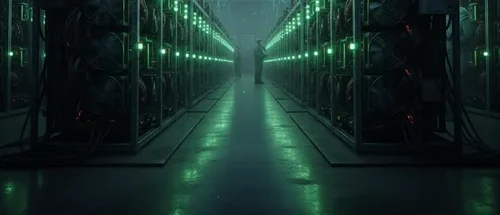
The ASIC era made home mining largely obsolete for Bitcoin. You’re not competing against other hobbyists anymore—you’re competing against warehouses filled with thousands of machines running 24/7.
Is Crypto Mining Profitable in 2025? (The Honest Numbers)
The Four Factors That Determine Profitability
Mining Profitability Depends On:
- Electricity cost: The #1 make-or-break variable
- Hardware efficiency: Hash rate per watt
- Bitcoin price: Higher prices = higher revenue
- Network difficulty: More competition = smaller slice of rewards
Here’s the 2025 reality: Bitcoin miners earned 1.2 billion collectively this year. That sounds great until you realize the average cost to mine a single Bitcoin ranges from 6,000 to 0,000 depending on your setup and electricity rates.
Electricity Costs: The Make-or-Break Variable
I cannot stress this enough: electricity is everything in mining economics.
- Under /bin/bash.05/kWh: Excellent margins, industrial-scale viable
- /bin/bash.06-0.09/kWh: Risky, requires optimal equipment
- /bin/bash.10/kWh and above: Unprofitable for most operations
Average U.S. residential electricity runs /bin/bash.12-0.16/kWh. At those rates, mining Bitcoin at home is a money-losing proposition. The miners making real money have access to wholesale power rates, often in locations with cheap hydroelectric or natural gas.
The 2024 Halving Impact and Rising Difficulty
The April 2024 halving cut block rewards from 6.25 to 3.125 BTC. Meanwhile, mining difficulty increased 35% in 2025, with network hashrate growing from 795 to over 1,000 EH/s (exahashes per second).
A single high-performance mining rig might generate 00-500 per month profit under optimal conditions. But “optimal” means industrial-scale electricity rates, modern equipment, and proper cooling—not your spare bedroom.
If you need to sell mining rewards to cover costs, you’ll need access to cryptocurrency exchanges with reasonable fees.
The Environmental Reality of Crypto Mining
Energy Consumption By the Numbers
Let’s address the elephant in the room. According to the Cambridge Bitcoin Electricity Consumption Index, Bitcoin mining consumes approximately 138-211 TWh annually. That’s 0.5-0.83% of global electricity consumption—comparable to a medium-sized country.
The network generates an estimated 39.8 Mt of CO2 emissions annually. Recent environmental impact research has raised serious concerns about sustainability.
“If the power source, the energy source, it’s not renewable, think about coal, think about natural gas, and so on, they come with carbon footprints, they come with environmental impacts, and they come with climate consequence, and that’s not a good idea.”
— Professor Fengqi You, Cornell University, Energy Systems
The Renewable Energy Shift
Here’s where the story gets more nuanced. The industry has made significant progress:
- 52.4% of Bitcoin mining now uses sustainable energy (up from 37.6% in 2022)
- Nuclear (9.8%) and renewables (42.6%) power over half the network
- Natural gas (38.2%) has largely replaced coal (now just 8.9%)
The U.S. hosts approximately 75% of reported Bitcoin mining activity, with Canada at 7%. Many operations are strategically located near renewable energy sources.
Air Pollution and Health Impacts
A concerning study found that the 34 largest U.S. Bitcoin mines exposed approximately 1.9 million people to increased PM2.5 air pollution. These operations consumed 32.3 TWh from August 2022 to July 2023, with 85% coming from fossil fuels.
This is a real trade-off. I’m bullish on crypto long-term, but I won’t pretend the environmental concerns don’t exist. They do, and the industry needs to continue its shift toward cleaner energy sources.
Should You Start Mining in 2025? (The Decision Framework)
When Mining Makes Sense
Mining might be viable for you if you have:
- Access to cheap electricity: Industrial rates under /bin/bash.06/kWh
- Significant capital: 0,000+ for competitive hardware
- Technical knowledge: Ability to maintain and troubleshoot equipment
- Long-term commitment: This isn’t a get-rich-quick scheme
- Heat tolerance: Mining rigs generate serious heat and noise
Better Alternatives for Most People
For the average person interested in crypto, mining probably isn’t your best entry point. Consider these alternatives:
- Buy directly: Investing small amounts in cryptocurrency through exchanges is more cost-effective
- Staking: Crypto staking offers passive income with Proof of Stake coins, no hardware required
- Cold storage: If you do accumulate crypto, consider cold storage solutions for long-term security
If You Still Want to Try: Mining Pools and Cloud Mining
Mining pools combine hashpower from multiple miners for more consistent (though smaller) rewards. Instead of winning occasionally with large payouts, you receive steady smaller amounts proportional to your contribution.
Cloud mining lets you rent mining power without owning hardware. Fair warning: this space is rife with scams. Verify any provider thoroughly before investing. The fees also eat significantly into potential profits.
For educational purposes, solo mining small amounts on less competitive networks can teach you how the process works—just don’t expect to profit.
The Bottom Line
Crypto mining in 2025 is an industrial business, not a bedroom hobby. The days of mining Bitcoin profitably on your gaming PC are long gone. What remains is a capital-intensive operation that requires cheap electricity, expensive specialized hardware, and the infrastructure to support it.
If you have the resources and access to wholesale power rates, mining can still be profitable. For everyone else, buying crypto directly or exploring staking opportunities will likely deliver better returns with less hassle.
I learned this lesson the hard way back in 2017, watching my laptop spin its fans for nothing while industrial operations were printing money. The crypto space rewards those who understand the actual economics—not the hype. Do your research, run the numbers, and make decisions based on reality, not wishful thinking.