What Are NFTs: How Non-Fungible Tokens Work and Why They Still Matter
What is an NFT? Learn how non-fungible tokens work on the blockchain, what types exist, how to buy one, and whether they still worth it in 2026.

In this article
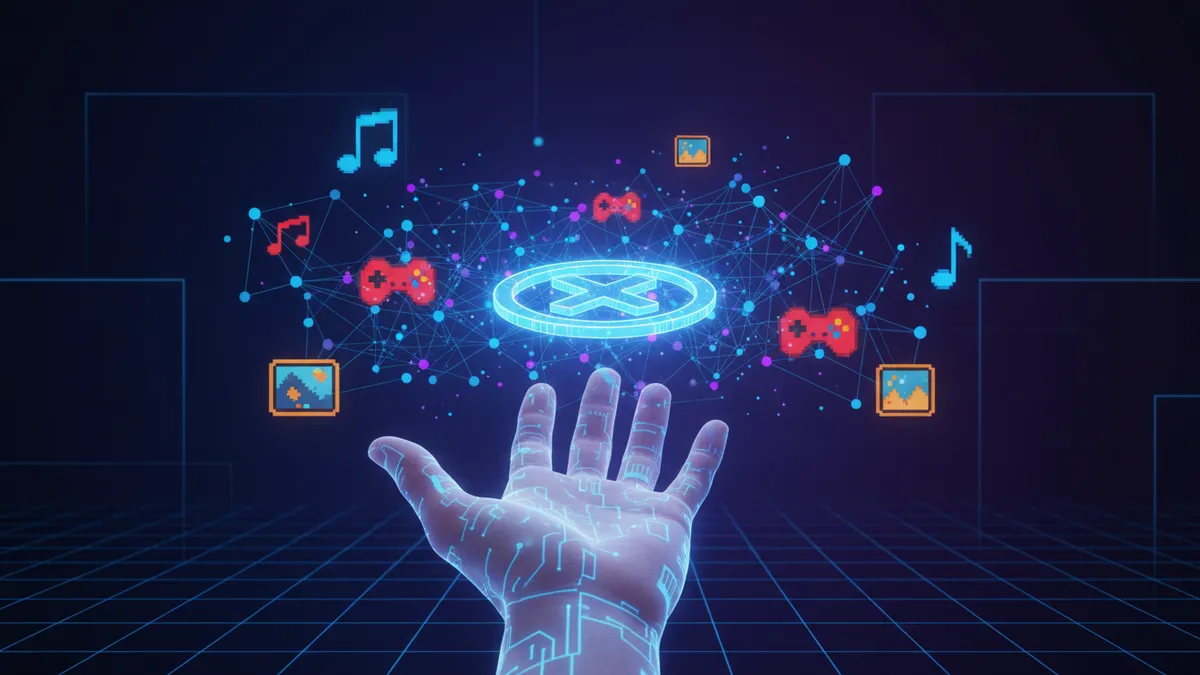
If you’ve spent any time online in the last few years, you’ve probably heard the term NFT thrown around like confetti at a bull market party. But what is an NFT, really? Strip away the hype, the million-dollar JPEGs, and the celebrity endorsements, and you’re left with something genuinely interesting: a way to prove you own something digital. A non-fungible token is a unique digital identifier recorded on a blockchain technology network that certifies ownership and authenticity of a specific digital item. It can’t be copied, swapped, or subdivided.
I remember the first time someone tried to explain NFTs to me. It was late 2021, on a Discord call with my trading community. A guy I’d been analyzing charts with for months had just made $40K flipping Bored Apes. My gut screamed “buy in now.” The FOMO was suffocating. But the position-sizing discipline I’d built through years of recovery kept me from throwing money at something I didn’t fully understand. When prices cratered 90% over the following year, I was grateful for that restraint. That experience taught me something: before you risk a single dollar on NFTs, you need to actually understand how they work.
What Is an NFT? (The Definition That Actually Makes Sense)
An NFT is a digital certificate of ownership. Think of it like the title deed to your car, except it lives on the blockchain instead of in a filing cabinet. The token itself doesn’t contain the image, song, or game item. It stores a reference to that file (usually a link) plus a permanent record of who owns it and who owned it before.
What “Non-Fungible” Actually Means
This is where most explanations lose people, so let me keep it simple. “Fungible” means interchangeable. A dollar bill is fungible because any dollar works the same as any other dollar. One Bitcoin equals one Bitcoin. They’re identical.
“Non-fungible” means unique and not interchangeable. Your childhood photo is non-fungible. A specific CryptoPunk is non-fungible. You can’t swap it 1:1 with another and call it equal. That uniqueness is what gives NFTs their entire reason for existing.
How NFTs Differ From Regular Cryptocurrency
This trips people up constantly. Ethereum and Bitcoin are cryptocurrencies. Every ETH coin is identical to every other ETH coin. NFTs are built on top of those same blockchains, but each token is one-of-a-kind. You trade crypto like cash. You collect NFTs like art.
How NFTs Work Under the Hood
Understanding the technical side doesn’t require a computer science degree. But knowing the basics protects you from scams and helps you evaluate which projects are legitimate. I’ll cover three core concepts: minting, smart contracts, and storage.
The Minting Process: How NFTs Are Created
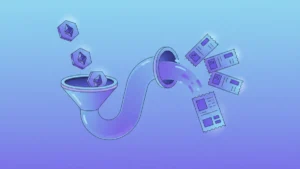
Minting is the process of turning a digital file into an NFT on the blockchain. Here’s how it works in practice:
- Creator uploads a file (artwork, music, video) to an NFT marketplace
- The marketplace triggers a smart contract that assigns a unique token ID to that file
- That token ID gets recorded on the blockchain permanently, creating an immutable ownership record
Once minted, the NFT exists as a verifiable digital asset. The creator can sell it, and every future sale gets tracked on-chain.
Smart Contracts: The Engine Behind Every NFT
Smart contracts are self-executing programs on the blockchain. For NFTs, they handle three critical jobs:
- Ownership transfers: When you buy an NFT, the smart contract automatically moves it to your wallet
- Creator royalties: Many contracts include automatic royalty payments to the original artist on every resale
- Provenance verification: The entire ownership history is visible and tamper-proof
Ethereum’s ERC-721 and ERC-1155 are the primary token standards that make this possible. Ethereum powers roughly 62% of all NFT contracts globally, though Solana and other chains are growing fast.

Where NFT Data Actually Lives (IPFS Explained Simply)
Here’s something most NFT articles skip, and it matters a lot. The actual image or file attached to your NFT usually does not live on the blockchain. Storing large files on-chain would be prohibitively expensive.
Instead, the NFT stores a link to the file. The best projects use IPFS (InterPlanetary File System), a decentralized storage network where files are spread across many computers. This matters because if a project stores files on a regular company server and that company goes under, your NFT becomes a broken link to nowhere. I’ll explain this risk in more detail later.
What Can Actually Be an NFT? (The Real Use Cases)
When people hear “NFT,” they think of expensive cartoon apes. That’s like hearing “internet” and thinking “cat videos.” The technology goes way deeper than profile pictures.
Digital Art and Collectibles
This is the use case that put NFTs on the map. Artists can sell directly to collectors, keep royalties on secondary sales, and prove authenticity without galleries or middlemen. Projects like CryptoPunks and generative art platforms created a new market for digital creativity.
Gaming: Own Your In-Game Items for Real
Gaming NFTs account for roughly 25% of total NFT trading volume in 2025. The concept is straightforward: instead of a game company owning your skins, weapons, and characters, you own them as NFTs. You can sell them, trade them, or potentially use them across different games.
As someone who plays poker and chess for the strategic thinking, I find gaming NFTs fascinating. They’re bringing real ownership into virtual worlds, and that’s a problem worth solving.
Music, Film, and Creator Royalties
Musicians are using NFTs to bypass record labels and sell directly to fans. The smart contract handles royalty payments automatically on every resale. No lawyers, no delayed payments, no middlemen taking 80% of the revenue. For independent creators, that’s a game-changer.
Event Tickets and Memberships
NFT tickets eliminate counterfeiting and scalping. The promoter can program the ticket to prevent resale above face value, include VIP perks that unlock automatically, and verify authenticity instantly at the door. I saw this firsthand at Bitcoin Miami 2023 where NFT-gated events were seamless compared to the traditional ticketing chaos.
Real-World Asset Representation
This is where things get interesting for the future. Real estate deeds, supply chain tracking, university diplomas, and professional credentials can all be represented as NFTs. The idea of decentralized finance merging with real-world assets is still early, but it’s the use case that excites me most. Even Bitcoin Ordinals have expanded NFT functionality to the Bitcoin blockchain itself.
How to Buy Your First NFT (Step-by-Step)
If you’ve read this far and want to try buying an NFT yourself, here’s the process broken down. Fair warning: take it slow. I’ve seen too many people rush in and make expensive mistakes.
Quick Tip Before You Start
Only invest money you can afford to lose completely. NFTs are speculative assets. Treat your first purchase as a learning experience, not an investment thesis. Start small.
Step 1: Set Up a Crypto Wallet
You need a crypto wallet to buy, store, and manage NFTs. MetaMask is the most popular choice for Ethereum-based NFTs. Phantom is the go-to for Solana. Both are free browser extensions.
When you create your wallet, you’ll receive a seed phrase: 12 or 24 random words. Write this down on paper and store it somewhere secure. Never share it with anyone. Anyone who has your seed phrase owns everything in your wallet.
Step 2: Fund Your Wallet With ETH (or Use a Low-Fee Alternative)
Buy ETH through a major exchange like Coinbase and transfer it to your wallet. If gas fees on Ethereum mainnet are too steep for a first purchase, consider using Layer 2 networks like Polygon, which offer dramatically lower transaction costs.
Step 3: Connect to an NFT Marketplace
The major marketplaces are:
- OpenSea: The largest general marketplace, supports multiple chains
- Magic Eden: Strong on Solana and expanding multi-chain
- Blur: Designed for professional traders with advanced features
Connect your wallet to the marketplace. Browse collections. And always verify the official smart contract address of any collection before buying. Fake collections with stolen artwork are everywhere.
Step 4: Understand Gas Fees Before You Confirm
Crypto gas fees are the transaction costs for using the blockchain network. On Ethereum, these fluctuate based on network congestion. A transaction that costs $5 at midnight might cost $50 during peak hours.
Pro tip: check how gas fees work on NFT platforms and use Etherscan’s Gas Tracker to time your purchases when fees dip. It can save you a meaningful amount, especially on lower-priced NFTs where gas might exceed the item’s price.
NFT Risks You Need to Understand Before Buying
I believe in being radically honest about risk. It’s a principle that’s served me well in both trading and life. So here’s what can go wrong.
Rug Pulls and Scam Projects
Rug pulls are the biggest threat in the NFT space. The pattern is predictable: anonymous team launches a flashy collection, hypes it on social media, collects millions during the mint, then vanishes. Holders are left with worthless tokens and zero recourse.
Learning to spot a crypto rug pull before it happens is a survival skill. Look for doxxed team members, verified smart contracts, and realistic roadmaps. If the promises sound too good, they probably are.
Liquidity Risk: Most NFTs Are Hard to Sell
Unlike ETH or Bitcoin, you can’t just hit “sell” on an NFT and get instant cash. You need a buyer willing to pay your asking price. Most NFTs have thin markets. If hype fades or the collection loses momentum, you could be stuck holding something nobody wants.
Think of the market cap of a collection like a liquidity indicator. Small collections with low volume are significantly harder to exit.
The Storage Problem: What Happens If the Project Shuts Down?
Remember the IPFS discussion earlier? Here’s the payoff. If an NFT project stores its metadata on a centralized server instead of decentralized storage, the entire visual component of your NFT disappears when that server goes offline. Your token still exists on-chain, but it points to nothing.
“NFTs are at a liminal stage as an asset class: to govern digital objects as an asset necessitates a continual expansion of the community of people who adhere to the belief that NFTs are both useful and lucrative economic assets.” — Alia Miroshnichenko & Kean Birch, Science, Technology, & Human Values, 2025
Always check where a project’s data lives before buying. On-chain or IPFS storage is a green flag. Centralized hosting is a red flag.
Are NFTs Still Worth It in 2026?
This is the question I get asked more than any other. And my honest answer is: it depends on what you’re buying and why.
The Market Reality After the Hype Cycle
The speculative bubble absolutely burst. Annualized NFT trading volume dropped to roughly $5.5 billion in 2025, a fraction of the peak according to Statista NFT market data. Profile picture collections that sold for six figures are now worth pennies. That’s reality, and anyone who tells you otherwise is selling something.
But here’s what’s also true: weekly NFT sales recently jumped 37.41% to $88.29 million, with Ethereum sales up 39.08%. The market isn’t dead. It’s different.
Where NFTs Are Actually Finding Real Value
The projects surviving and growing share one trait: genuine utility. Gaming NFTs continue to grow. Music NFTs give artists real revenue. Ticketing NFTs solve real problems. AI-related NFT projects now represent roughly 30% of new developments, showing the technology is evolving rather than fading.
Understanding the tokenomics of any NFT project is essential before buying in. Supply, royalty structures, and utility mechanisms all determine long-term value. The era of buying random JPEGs and expecting 100x returns is over. The era of NFTs as functional digital infrastructure is just beginning.
As the U.S. Government Accountability Office NFT spotlight report noted, regulatory clarity is still evolving. That’s both a risk and an opportunity. Concepts like wrapped tokens are making cross-chain NFT movement easier, which could expand liquidity over time.
The Bottom Line on NFTs in 2026
Speculative NFTs remain high-risk. Utility-backed NFTs with real use cases, active communities, and transparent teams have a genuine future. Do your research, start small, and never invest more than you can afford to lose.
Frequently Asked Questions
Can I create my own NFT?
Yes. Most major marketplaces like OpenSea let you mint an NFT for free or for a small gas fee. You upload your digital file, add metadata (name, description, properties), and the platform handles the smart contract execution. You don’t need to know how to code.
Do I actually own the image when I buy an NFT?
You own the token, which represents provable ownership of that specific digital item. However, copyright and intellectual property rights vary by project. Some NFTs grant full commercial rights (like Bored Ape Yacht Club). Others only grant personal display rights. Always read the terms.
What happens to my NFT if the marketplace shuts down?
Your NFT lives on the blockchain, not the marketplace. If OpenSea shut down tomorrow, your tokens would still exist. You could access them through another platform or directly through the smart contract. The marketplace is just a user interface.
Are NFTs bad for the environment?
Ethereum’s transition to proof-of-stake in 2022 reduced its energy consumption by over 99%. NFTs on modern proof-of-stake chains have a minimal environmental footprint. This was a legitimate concern that the industry largely addressed.
What to Explore Next
If you’re starting to wrap your head around NFTs, the natural next step is understanding the infrastructure they run on. I’d recommend reading up on blockchain technology to get the full picture of how these systems secure ownership. From there, dive into smart contracts to understand the code that makes NFTs programmable. And if gas fees are still confusing you, my breakdown of crypto gas fees explains everything in plain English.
The NFT landscape has changed dramatically from the mania of 2021. But the core technology of provable digital ownership isn’t going anywhere. Whether you decide to buy your first NFT or just keep learning, the smartest move is always the same: understand before you invest. That’s a lesson I learned the hard way, and it’s one I’ll keep sharing as long as people are willing to listen.