How to Spot a Crypto Rug Pull Before You Lose Money (The Detection Guide I Wish I Had in 2021)
Learn the 10 red flags that signal a crypto rug pull before it's too late. Real examples, verification tools, and a 5-step checklist from someone who learned the hard way.

In this article
I still remember the night I watched a token I believed in drop 94% in twenty minutes. My hands shook as I refreshed the chart, hoping it was a glitch. It wasn’t. That was my first real lesson in what a crypto rug pull looks like up close.
If you’re reading this, you’re either curious about protecting yourself or you’ve already been burned. Either way, I’m glad you’re here. This guide contains everything I wish someone had told me back in 2021, when I was making common mistakes new crypto investors make without even realizing it.
What Exactly is a Crypto Rug Pull? (And Why 2025 Saw $6 Billion in Losses)
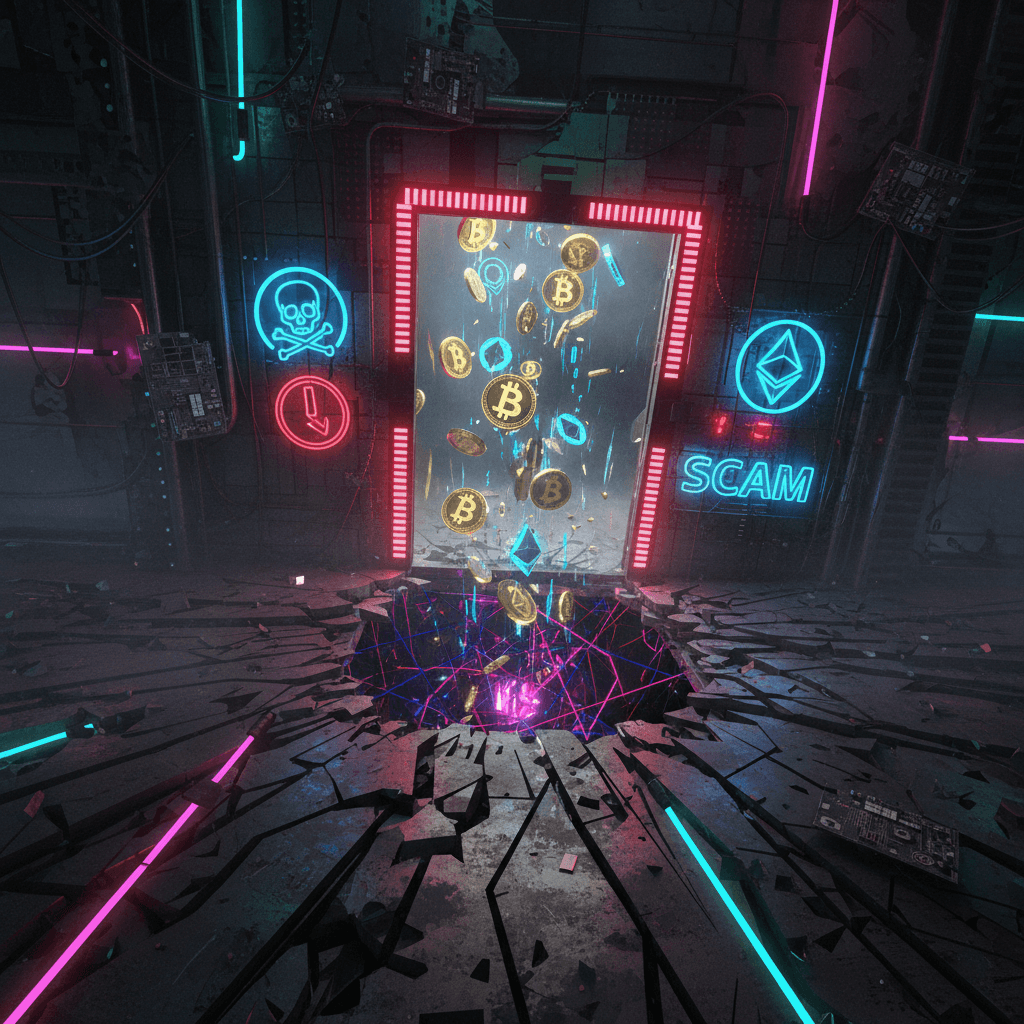
A crypto rug pull happens when developers create a token, hype it to attract investors, then disappear with all the money. Think of it like opening a lemonade stand, collecting money from the whole neighborhood, then vanishing overnight with the cash drawer.
The scary part? Rug pulls are getting worse, not better. In 2025 alone, investors lost $6 billion to these scams. That’s a 6,500% increase from the previous year. What’s even more troubling is that there were actually 66% fewer incidents. The scams just got bigger and more sophisticated.
There are a few variations you should know about:
- Hard rug pull: Developers exploit code in the smart contract to steal funds directly.
- Soft rug pull: The team slowly dumps their tokens over time, crashing the price.
- Honeypot scam: You can buy the token but the contract prevents you from ever selling it.
All three share the same result: you lose money while someone else laughs their way to the bank. Most rug pulls happen in the DeFi and meme coin space where oversight is minimal and hype is maximum.
The Anatomy of a Rug Pull: How It Happens
Understanding the lifecycle of a scam helps you spot one before it’s too late. Every rug pull follows a predictable four-stage pattern.
The Setup Phase: Building Hype and FOMO
Scammers create a token with a catchy name, flashy website, and promises of revolutionary technology. They flood social media with posts. They pay influencers to shill. They manufacture urgency.
“Get in now before it’s too late!” Sound familiar? FOMO is their favorite weapon. They want you acting on emotion, not analysis.
The Pump Phase: Price Manipulation and Fake Volume
Early investors see gains. Charts go up and to the right. The Discord is popping off. Everyone thinks they found the next Bitcoin.
What’s actually happening? The team is wash trading (trading with themselves) to fake volume. They’re coordinating pump groups. They’re manufacturing the illusion of organic growth while loading up their own bags.
The Dump Phase: Liquidity Drain and Token Sell-Off
This is when things get ugly. The developers or major holders start dumping their tokens en masse. Sometimes they drain the liquidity pool directly through a contract exploit. Either way, the price craters in minutes.

If you’ve ever watched a chart fall faster than you can click “sell,” you know this feeling. Your stomach drops before the price finishes dropping.
The Disappearance: Ghost Team and Dead Socials
Twitter account deleted. Telegram group locked. Website offline. The developers evaporate like they never existed. You’re left holding worthless tokens and a lot of questions.
10 Red Flags That Scream ‘Rug Pull Incoming’
Here’s where I give you the detection toolkit. These are the warning signs that separate legitimate projects from elaborate theft.
#1 Anonymous or Fake Team Members
Legitimate founders put their reputations on the line. Scammers hide behind cartoon avatars and pseudonyms. If you can’t find real LinkedIn profiles, GitHub histories, or verifiable work experience, that’s a major red flag.
Pro tip: Reverse image search team photos. Scammers love using AI-generated faces or stock photos from other sites.
#2 Unlocked Liquidity (The Biggest Warning Sign)
This is the single most important thing to check. Liquidity is what allows you to buy and sell tokens. If that liquidity isn’t locked in a smart contract, the developers can pull it out anytime, instantly crashing the price to zero.
On Etherscan or similar block explorers, look for the largest LP (liquidity pool) holder. If it’s locked with a time delay of at least 6 months (ideally a year or more), that’s good. If there’s no lock, run.
#3 No Smart Contract Audit or Fake Audit
Real projects get their code reviewed by security firms like CertiK, Hacken, or PeckShield. Scammers either skip audits entirely or fabricate fake ones.
Always verify audits directly on the auditor’s website. Don’t trust a PDF link from the project’s own site.
#4 Unrealistic APY or Guaranteed Returns
When someone promises 10,000% APY or “guaranteed” gains, your scam alarm should be screaming. Compare these promises to actual legitimate crypto staking yields, which typically range from 3-15% on established platforms.
If it sounds too good to be true, it’s because math doesn’t support it.
#5 Concentrated Token Holdings (Whale Wallets)
Check the token distribution on the blockchain explorer. If one or two wallets hold more than 20% of the supply (outside of clearly labeled exchange or burn addresses), those whales can crash the price whenever they want.
When I see concentrated holdings, I ask myself: would I trust these strangers with my money? Usually, the answer is no.
#6 You Can’t Sell Your Tokens (The Honeypot Test)
This is my favorite protection method because it costs almost nothing. Before investing seriously, buy $10 worth and immediately try to sell it. If the transaction fails or you get a “not authorized” error, you’ve found a honeypot. Your $10 is gone, but you just saved yourself from a much bigger loss.
I know people who skipped this step and lost thousands. Ten dollars is cheap insurance.
#7 Excessive Social Media Hype Without Substance
Legitimate projects talk about technology, partnerships, and development updates. Scams talk about price predictions and “going to the moon.”
Count the ratio of substance to hype in their communications. If it’s mostly rocket emojis and lambo talk, proceed with extreme caution.
#8 Missing, Vague, or Plagiarized Whitepaper
A whitepaper should explain what problem the project solves and how. Rug pulls often have whitepapers filled with buzzwords and no actual substance. Some literally copy paragraphs from legitimate projects.
Run suspicious text through a plagiarism checker. You’d be surprised how lazy some scammers are.
#9 Brand New DEX with No Trading History
Trading on sketchy decentralized exchanges with zero track record is asking for trouble. Stick to reputable cryptocurrency exchanges when possible. If a token only trades on platforms you’ve never heard of, that’s worth questioning.
#10 Celebrity Endorsements and Influencer Shilling
Celebrities get paid to promote things they don’t understand. The Hawk Tuah token disaster (more on that below) proved this perfectly. Paid shills, fake endorsements, and influencer pumps are marketing tactics, not fundamentals.
Even crypto trading bots and automation won’t save you if you’re trading garbage. No tool fixes bad due diligence.
Real Rug Pulls That Cost Investors Billions
Let’s examine some recent disasters. These aren’t theoretical risks. Real people lost real money.
Mantra (OM Token): $5.52 Billion Vanished Overnight (2025)
This was the biggest rug pull of 2025. Mantra was marketed as a legitimate Real World Assets (RWA) project. It had a professional team, partnerships, and a compelling narrative.
Then 17 insider wallets moved $227 million worth of OM tokens to exchanges. The price crashed 94% in hours, dropping from $6.35 to $0.37. According to a comprehensive analysis of the biggest crypto rug pulls, total losses exceeded $5.5 billion.
The lesson? Even “legitimate-looking” projects can rug. Don’t let professional marketing lower your guard.
Hawk Tuah ($HAWK): The Viral Meme Coin Scam (December 2024)
Remember Haliey Welch, the viral “Hawk Tuah” girl from that summer interview? Someone launched a token in her name. It hit a $490 million market cap in hours.
Then it dumped 95% overnight. Insiders sold. Regular investors got demolished. The influencer claimed she didn’t understand what happened. Investors didn’t care about her excuses.
Squid Game Token: The Netflix-Inspired Disaster (2021)
This one still makes me angry. Scammers created a token based on the popular Netflix show. It surged 40,000% in days. The hype was unreal.
The catch? The smart contract literally prevented anyone from selling. It was a honeypot from day one. The developers stole at least $1.1 million while investors could only watch their worthless tokens sit in their wallets.
Essential Tools to Check a Token Before You Buy
You don’t need to be a programmer to protect yourself. These free tools do the heavy lifting.
Token Sniffer: Multi-Chain Scam Scanner
Token Sniffer gives every token a 0-100 risk score. It checks for hidden mint functions (which let developers print unlimited tokens), fake source code, and other red flags. Works across Ethereum, BSC, and multiple chains.
I check this before every degen play. Takes thirty seconds and has saved me countless times.
RugCheck.xyz: Solana Token Specialist
If you’re playing in the Solana ecosystem, RugCheck.xyz is your best friend. It’s specifically designed for SPL tokens and catches issues that general scanners miss.
Etherscan & BscScan: Manual Contract Analysis
For deeper analysis, go directly to the blockchain explorer. Look at the contract source code. Check holder distribution. Verify liquidity locks. You don’t need to understand code to spot red flags like concentrated wallets or missing source verification.
DEXTools & DEX Screener: Liquidity and Trading Analytics
DEXTools shows you real-time liquidity data, trading volume, and holder statistics. You can see exactly how much liquidity exists and whether it’s locked. If a token has $50k market cap but only $500 in liquidity, that’s a red flag.
My 5-Step Pre-Investment Checklist (Use This Every Time)
I use this exact process before buying any new token. It takes ten minutes and has probably saved me thousands.
Before You Buy: The 5-Step Protection Protocol
- Run the contract through Token Sniffer or RugCheck. Score below 70? Skip it.
- Verify team identities. LinkedIn, GitHub, previous projects. No faces means no trust.
- Check liquidity lock duration. Minimum 6 months. A year is better. Forever is best.
- Do the honeypot test. Buy $10, sell immediately. If you can’t sell, you’ve just avoided disaster.
- Read the full audit report. Verify it on the auditor’s official site. Not a PDF from the project.
I skipped this checklist once, early in my trading days. I saw a token pumping, got excited, and aped in without doing my homework. Within hours, the developers drained the liquidity pool and disappeared. That $800 loss hurt, but the lesson was worth more.
Now I never skip these steps. Ever. Good risk management strategies mean nothing if you invest in garbage.
What to Do If You’re Already Holding a Suspected Rug Pull
First, don’t panic. Panic leads to bad decisions. Take a breath, then act methodically.
If You Suspect a Rug Pull
- Try to sell immediately. If the contract allows it, get out now. Even partial recovery beats zero.
- Document everything. Screenshots of your transactions, the project’s social media, website archives. You’ll need this.
- Report to security firms. PeckShield and CertiK both accept scam reports. Chainalysis tracks stolen funds.
- File with authorities. For substantial losses, report to the FBI’s IC3 portal.
- Warn others. Post on crypto Twitter and Reddit. You might save someone else from the same fate.
Here’s something most people don’t know: you can claim worthless tokens as a capital loss on your taxes. Look into tax loss harvesting strategies. It won’t get your money back, but it softens the blow at tax time.
One important note: don’t mistake normal volatility for a rug pull. Good projects dump 30-50% sometimes. That’s crypto. A true rug pull involves team disappearance, liquidity drain, or contract exploits. Know the difference before panic selling your winners.
The Bottom Line: In Crypto, Trust Nobody by Default
“DYOR” (Do Your Own Research) gets thrown around so much it’s become a cliche. But it’s also the most important principle in crypto investing.
The tools exist. The red flags are documented. The scammers follow predictable patterns. If you use the checklist, run the scans, and stay skeptical, you’ll avoid most rug pulls.
My personal rule: I keep 95% of my crypto in established, proven projects. Only 5% goes toward higher-risk plays, and even those get the full verification treatment. The potential moonshot isn’t worth the probable total loss.
I’ve been in crypto long enough to see friends lose life-changing money to these scams. I’ve lost money myself. Every lesson in this article came from either my mistakes or watching others make theirs. I hope you can learn without paying the same tuition.
Stay skeptical. Verify everything. And if something feels off, trust your gut and walk away.
Keep Learning
If you found this guide helpful, consider reading my piece on securing your crypto wallet for broader protection strategies. No point in dodging rug pulls if your wallet gets compromised.
Got questions about a specific token or situation? Drop a comment below. I read every single one.