What Is a Bitcoin ETF: How It Works and Why It Changed Crypto Forever
Spot Bitcoin ETFs crossed $100B in AUM. Here is exactly how a Bitcoin ETF works, the difference from owning BTC, and when it makes sense for you.

In this article
What Is a Bitcoin ETF (The 30-Second Version)
If you’ve been anywhere near financial news in the past two years, you’ve probably heard the term Bitcoin ETF thrown around. So what is a Bitcoin ETF, really? It’s simpler than most people think.
An ETF (exchange-traded fund) is a fund you buy and sell on a stock exchange, just like a regular share of Apple or Amazon. Think of it like an index fund that tracks a specific asset. A Bitcoin ETF tracks the price of Bitcoin without you ever touching, holding, or managing any actual BTC.
The watershed moment came on January 11, 2024, when the SEC approved 11 spot Bitcoin ETFs in a single day. I had alerts set on my phone the night before that decision dropped. Barely slept. I remember refreshing Twitter at 3 AM, watching the rumors shift from “delayed again” to “it’s happening.” And when it did happen, it felt like a decade of crypto advocacy compressed into one press release.
Before that approval, getting Bitcoin exposure meant opening a Coinbase account, verifying your identity, learning how blockchain technology works, and managing a wallet. Now? You open your Schwab or Fidelity app and buy a ticker symbol. That’s the shift.
Spot Bitcoin ETF vs. Futures Bitcoin ETF: The Difference Actually Matters
Not all Bitcoin ETFs are created equal. This distinction tripped me up early on, and I’ve seen it confuse a lot of smart people who should know better.
Spot ETFs: They Own Real Bitcoin
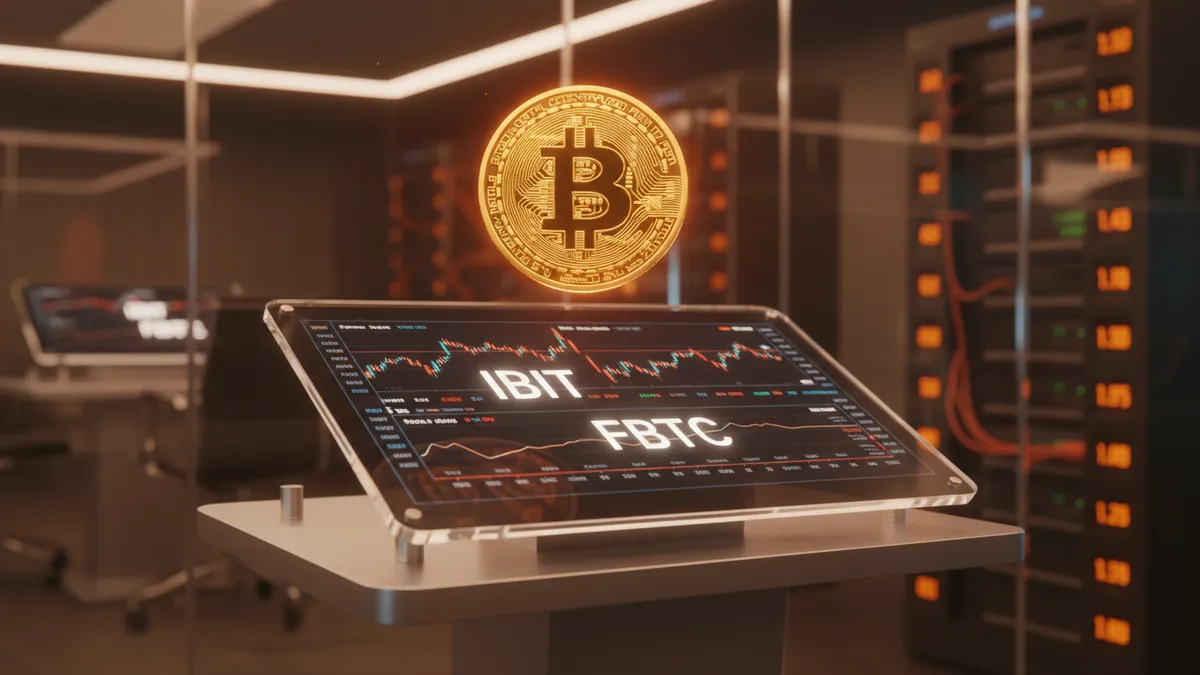
A spot Bitcoin ETF holds actual Bitcoin through a custodian. When you buy shares of BlackRock’s IBIT, for example, the fund literally purchases BTC and stores it with Coinbase Custody. Your shares represent a claim on that real Bitcoin.
This is the kind that launched in January 2024. It’s straightforward: the ETF price tracks Bitcoin’s actual market price, minus a small management fee.
Futures ETFs: Contracts, Roll Costs, and Why I Avoid Them
Futures-based Bitcoin ETFs like ProShares BITO don’t hold any Bitcoin at all. Instead, they hold derivative contracts that are agreements to buy or sell BTC at future dates. You can read the CFTC’s official explainer on Bitcoin futures ETFs for the technical details.
Here’s the problem: those contracts expire. When they do, the fund has to “roll” into new ones. In a market condition called contango (where future prices are higher than spot prices), this rolling process quietly eats into your returns over time.
Quick Comparison: Spot vs. Futures ETF
- Spot ETF (IBIT, FBTC): Holds real BTC, ~0.25% expense ratio, tight price tracking
- Futures ETF (BITO): Holds contracts, ~0.95% expense ratio, contango drag erodes returns
Bottom line: if you’re choosing a Bitcoin ETF today, go spot. The futures era was a workaround. We have the real thing now.
The Major Bitcoin ETFs Worth Knowing in 2026
The spot Bitcoin ETF landscape has consolidated fast. Two names dominate, and a handful of others compete on the margins. You can track live Bitcoin ETF flow data on CoinGlass for the latest numbers.

BlackRock IBIT: The 800-Pound Gorilla
IBIT commands roughly $65 billion in assets under management and over 60% market share among spot BTC ETFs. The expense ratio sits at 0.25%, and Coinbase Custody holds the underlying Bitcoin. For active traders, IBIT offers the tightest bid/ask spreads at around 0.02%.
When I talk to people who are just getting started, IBIT is usually my default recommendation. It has the liquidity and the institutional backing that makes me sleep easier.
Fidelity FBTC: The Challenger with In-House Custody
FBTC sits at roughly $17.7 billion AUM with the same 0.25% expense ratio. The key difference? Fidelity Digital Assets holds the Bitcoin in-house rather than outsourcing to a third-party custodian. If you already have a Fidelity brokerage account, FBTC is the natural choice.
Others Worth a Glance
ARK 21Shares ARKB, Bitwise BITB, and VanEck HODL are all competitive on fees and worth considering. The differences between them are slim at this point. What matters more is which brokerage you already use and how you feel about the custodial arrangement.
The bigger picture: cumulative spot BTC ETF inflows are approaching the $100 billion milestone as of early 2026. That number represented roughly 6.3% of Bitcoin’s market cap at the time. Let that sink in.
Why Bitcoin ETFs Changed Everything for Investors
I’ve been in crypto since the days when “institutional adoption” was a meme people used to cope during bear markets. Then it actually happened, and it happened fast.
Institutional Floodgates Finally Opened
In their first year alone, spot BTC ETFs attracted over $63.5 billion in net inflows. That made them the fastest ETF category launch in history. In 2025, crypto ETFs absorbed another $46.7 billion, with IBIT alone pulling in $25.1 billion.
Pension funds and endowments that couldn’t touch Bitcoin due to custody compliance issues now get exposure through a familiar ETF wrapper. The Bitcoin dominance metric climbed alongside these inflows, as institutional money poured specifically into BTC rather than altcoins.
The timing aligned with the 2024 Bitcoin halving events, creating a supply squeeze just as demand from ETFs surged. That’s a combination the market hadn’t seen before.
Bitcoin Now Lives Inside Your 401(k) and IRA
Here’s the moment I knew everything had shifted: my dad called me. Not about some altcoin a coworker mentioned. He asked if he could buy Bitcoin in his Schwab account after seeing IBIT on the news. My dad, who still prints out his bank statements.
Fidelity has added Bitcoin ETF options to select 401(k) account plans. You can also hold Bitcoin ETF shares inside a Roth IRA, which means tax-free growth on an asset that’s historically returned more than almost anything else over a 4-year cycle.
“Tremendously smart investors believe bitcoin is the best risk-reward investment right now.”
— Joshua Brooks, CFP, Founder of Exponential Advisors (CNBC’s expert roundup on crypto in retirement accounts)
Financial advisors are generally recommending a conservative 1–5% allocation for interested clients. That’s not a huge bet, but inside tax-advantaged accounts, even a small allocation to an asset with Bitcoin’s upside profile can meaningfully impact long-term returns.
Bitcoin ETF vs. Buying Bitcoin Directly: Which Is Right for You?
This is the question I get asked more than any other. And honestly, I do both. Here’s how I think about it.
When a Bitcoin ETF Makes More Sense
- You want simplicity: No wallets, no seed phrase to protect, no exchange accounts to manage
- You want tax advantages: Bitcoin ETFs work inside IRAs and 401(k)s where direct BTC can’t go
- You’re already in a brokerage: Buy IBIT or FBTC right next to your other investments
- You’re an advisor managing client assets: The ETF wrapper solves custody and compliance headaches
When Owning Bitcoin Directly Still Wins
- True ownership: Not your keys, not your coins. With an ETF, you own shares in a fund, not Bitcoin itself
- No ongoing fees: Once you buy BTC, there’s no 0.25% annual drag on your position
- On-chain utility: You can actually use your Bitcoin for transactions, DeFi protocols, or earning yield
- Long-term conviction play: If you’re a multi-cycle HODLer, direct custody with best crypto hardware wallets or cold storage wallets eliminates counterparty risk entirely
For most people reading this, the honest answer is: the ETF is probably the better starting point. You can always learn self-custody later. But don’t let the convenience of an ETF stop you from understanding what you actually own (or don’t).
The Risks of Bitcoin ETFs Nobody Mentions at the Dinner Table
I’m not here to sell you on Bitcoin ETFs. I’m here to give you the full picture, including the parts that don’t make it into the marketing materials.
- Counterparty risk: If the fund provider fails or the custodian gets hacked, you have legal claims but not actual Bitcoin. That’s a meaningful difference.
- Fee drag over decades: 0.25% on $100,000 is $250 per year. That compounds against you over 10, 20, 30 years.
- No on-chain utility: ETF holders can’t spend, stake, or use their Bitcoin. You also can’t perform on-chain analysis on holdings that exist only as fund shares.
- Regulatory risk: The SEC approved these ETFs, but in extreme scenarios, regulations could change. It’s unlikely, but it’s not zero.
- Volatility doesn’t disappear: Bitcoin inside an ETF wrapper still drops 70%+ in bear markets. The packaging is different, but the asset is the same.
I still hold some BTC in cold storage alongside my ETF positions. For me, the ETF is a complement for tax-advantaged accounts, not a replacement for the real thing. I want both: the convenience and the sovereignty.
Should You Add a Bitcoin ETF to Your Portfolio? My Take
When I was rebuilding from zero after blowing up my first trading account in my mid-twenties, I wish something this simple had existed. Back then, getting Bitcoin meant wiring money to exchanges that sometimes disappeared overnight. An ETF in a Schwab account would have saved me a lot of sleepless nights and sketchy wire transfers.
Here’s my honest take for different people:
Who Should Consider a Bitcoin ETF
- Crypto-curious, not crypto-native: A small position in IBIT or FBTC is the most practical entry point available today
- Already holding BTC in cold storage: The ETF gives you IRA tax efficiency you can’t get any other way
- Conservative investors who want exposure: Keep it to 1–5% of your portfolio depending on risk tolerance
Don’t use the existence of a Bitcoin ETF as a reason to over-allocate. Bitcoin is still a volatile asset. A 5% position that doubles adds meaningful upside to your portfolio. A 50% position that drops by half could delay your retirement. Size it accordingly.
If you want a structured approach, I’ve written about building a crypto portfolio allocation strategy that balances risk and opportunity. And if you’re just getting started, the smartest move is usually to dollar cost average into Bitcoin rather than trying to time the market.
The Bitcoin ETF didn’t make Bitcoin less risky. It made Bitcoin more accessible. And for millions of investors who were locked out of the crypto economy by technical barriers, that accessibility changed everything. Whether you choose the ETF, direct ownership, or both, the important thing is understanding what you’re buying and why.