How Do Bonds Work: The Investment I Finally Stopped Ignoring
Learn how bonds work: types, yields, risks, and how they fit your portfolio. A plain-English explainer from someone who ignored bonds way too long.

In this article
What Is a Bond, Really?
If you’re wondering how do bonds work, here’s the short version: a bond is a loan you make to a government or corporation. In exchange, they pay you interest on a set schedule and promise to return your original investment on a specific date. That’s it. You’re the lender. They’re the borrower. And you get paid for the privilege.
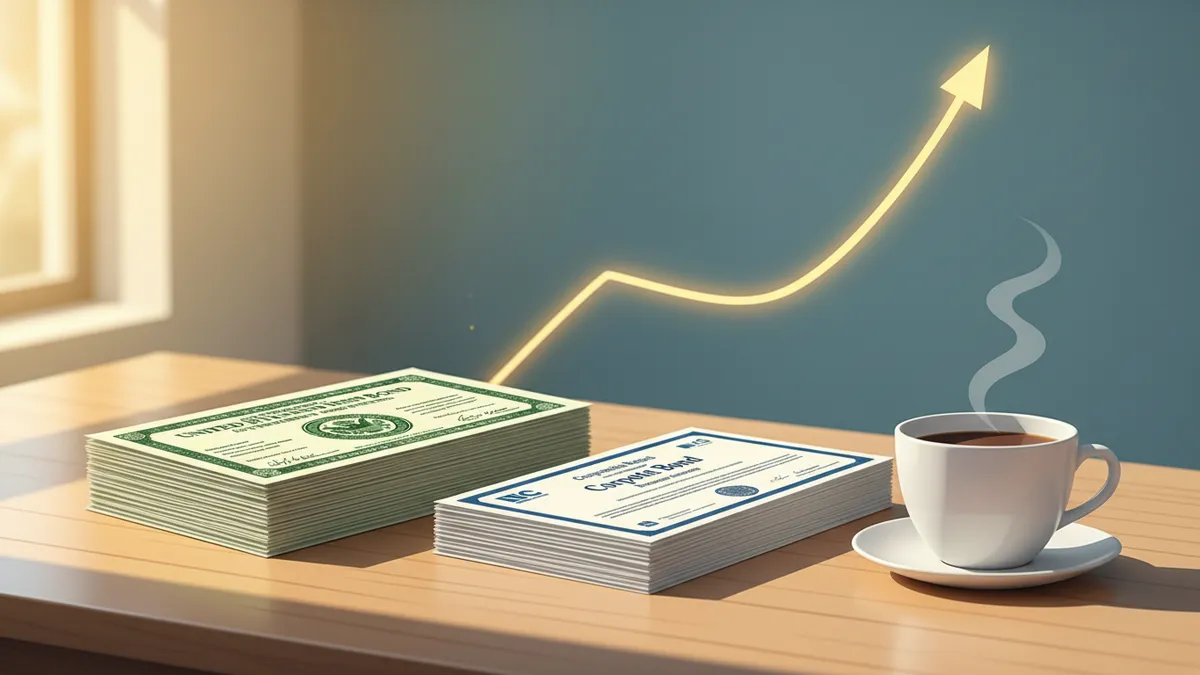
I’ll be honest. I ignored bonds for years. Thought they were for retirees and people who couldn’t handle a little risk. Then came a stretch in early 2022 where my all-equity portfolio dropped nearly 40% in three months. I remember sitting at my desk on a Sunday morning, coffee getting cold, watching the numbers fall and thinking, “Maybe I should’ve had a shock absorber in here.” That was my wake-up call. Bonds aren’t exciting. But they do something stocks can’t: they keep you in the game when everything else is falling apart.
According to the SEC Investor.gov bond basics page, bonds are one of the most common investment vehicles in the world. The US bond market alone holds $28.6 trillion in Treasuries. Globally, the bond market overview puts the total at over $120 trillion. These are not fringe instruments. This is where serious money lives.
And before you think bonds are only for people with big accounts, they’re not. You can start investing with little money through bond ETFs with as little as a dollar. This is long-term trading vs investing territory, and bonds are firmly on the investing side.
The Key Terms You Need to Know
Bonds come with their own vocabulary. Don’t let it scare you. Here are the four terms that actually matter.
Face Value (Par Value)
This is the amount you’ll get back when the bond matures. Most bonds have a face value of $1,000. Think of it as the amount the borrower is promising to repay you.
Coupon Rate
This is the annual interest rate the bond pays. A 5% coupon rate on a $1,000 bond means you earn $50 per year, usually paid in two $25 installments every six months. That’s your passive income from the bond.
Maturity Date
This is when the borrower pays back your principal. It could be 1 year, 10 years, or 30 years out. Generally, longer maturities pay higher interest rates because you’re locking up your money for longer.
Yield to Maturity (YTM)
This is the number that really matters. YTM accounts for what you actually paid for the bond versus its face value. If you bought a $1,000 bond at a discount for $950, your real return is higher than the coupon rate alone. YTM gives you the full picture.
Quick Example
You buy a bond with a $1,000 face value, a 5% coupon rate, and a 10-year maturity. Every six months, you receive $25. After 10 years, you get your $1,000 back. Total interest earned: $500. That’s the basic mechanics of how bonds work.
Types of Bonds: Which One Actually Matters for You
Not all bonds are created equal. Here’s a quick breakdown of the types you’ll encounter, and which ones are worth your attention.

Treasury Bonds (The Safest Option)
Backed by the full faith and credit of the US government. These are as close to risk-free as you can get. The 10-year Treasury yield data (FRED) shows the current rate sitting around 4.20% as of March 2026. Not flashy, but reliable.
Corporate Bonds (More Yield, More Risk)
Companies issue these to raise capital. Investment-grade corporate bonds currently yield 4.25-5.25% for 5-10 year maturities. The trade-off? If the company goes under, your bond could take a hit. Credit ratings from agencies like Moody’s and S&P help you gauge that risk. Stick to investment-grade (BBB or higher) unless you really know what you’re doing.
Municipal Bonds (The Tax Advantage)
Issued by state and local governments. The big draw here is that the interest is often exempt from federal income tax, and sometimes state tax too. If you’re a high-income earner, munis can be surprisingly effective. Just compare the tax-equivalent yield to see if they make sense for your bracket.
I Bonds (The Inflation Fighter)
These are my personal favorite for people who are worried about inflation eroding their returns. I Bonds adjust their rate based on inflation. The current composite rate is 4.03% (November 2025 through April 2026) according to TreasuryDirect I Bonds. The catch? There’s a $10,000 annual purchase limit per person, and you can’t sell them for the first year. But as an inflation hedge, they’re hard to beat.
Bond Funds and ETFs (The Easy Button)
If picking individual bonds sounds like too much work, bond ETFs solve that problem. A single fund like BND (Vanguard Total Bond Market) holds thousands of bonds and gives you instant diversification. The Bloomberg US Aggregate Bond Index returned roughly 7% in 2025, which is a solid year for fixed income. For most people, this is the move.
The Inverse Relationship: Why Bond Prices and Rates Move in Opposite Directions
This is the concept that trips up almost every beginner. It definitely tripped me up. I bought a chunk of long-duration bonds back before I understood this, and then watched the Fed hike rates aggressively. The price of my bonds dropped, and I panicked. Sold at a loss. Classic mistake.
Here’s how it works in plain English:
- When interest rates go UP: New bonds offer better coupon rates. Your older bond with a lower rate looks less attractive. So its price drops.
- When interest rates go DOWN: Your older bond now has a better rate than what’s available. Buyers are willing to pay more for it. So its price rises.
But here’s the key detail that would have saved me money: if you hold a bond to maturity, price fluctuations don’t matter. You still get your face value back on the maturity date. The inverse relationship only costs you if you sell early. I wish someone had told me that before I panic-sold.
Reinvesting those coupon payments over time is where compound interest starts working in your favor. It’s not flashy, but it adds up.
The Real Risks of Bond Investing
Bonds are safer than stocks, generally. But they’re not risk-free. Here are the three risks you need to know about.
Interest Rate Risk
We just covered this. Rising rates push bond prices down. The longer your bond’s maturity, the more sensitive it is to rate changes. Short-duration bonds (1-3 years) are less volatile. If you’re nervous about rate moves, keep your durations short. And if prices do drop, remember that tax loss harvesting works for bond losses the same way it does for stocks.
Credit Risk
This is the risk that the issuer can’t pay you back. US Treasuries have essentially zero credit risk. Corporate bonds carry more, depending on the company’s financial health. Credit ratings (AAA, AA, BBB, etc.) give you a quick read on this. Anything below BBB is considered “junk” or “high yield.” Higher yield, higher chance of default.
Inflation Risk
A 4% coupon sounds great until inflation is running at 6%. Your real return is negative. This is why I Bonds exist. They adjust for inflation automatically. For traditional bonds, just keep an eye on real yields (nominal yield minus inflation) to make sure you’re actually making money.
Where Bonds Fit in a Portfolio (And When They Actually Make Sense)
Here’s where it gets practical. How much of your portfolio should be in bonds?
“The primary role of fixed income in a portfolio is to diversify from stocks and preserve capital.” — Brett Koeppel, CFP
The classic 60/40 portfolio (60% stocks, 40% bonds) has decades of data behind it. It won’t make you rich overnight, but it’s designed to keep growing while cushioning the blows. There’s also the “100 minus your age” rule. If you’re 35, you’d hold 65% stocks and 35% bonds. Simple, if not perfect.
Personally, I think younger investors can afford to lean heavier into equities. But even a 10-20% allocation to bonds makes a real difference when markets tank. I think of bonds like the boring friend who always shows up with practical advice when you’re about to do something stupid with your money.
If you’re building a diversified portfolio, bonds pair well with index funds for your equity exposure and dividend investing for additional income. People in the FIRE movement often start shifting into bonds as they get closer to their target number, and for good reason.
How to Actually Buy Bonds
Knowing how bonds work is one thing. Actually buying them is another. Here are your three main options.
TreasuryDirect.gov (for US Treasuries and I Bonds)
This is the official US government platform. You can buy Treasury bonds and I Bonds directly, with no fees and a minimum of just $100. The interface is a bit dated, but it works. If you want I Bonds, this is the only place to get them.
Through Your Brokerage Account
Most major brokerages (Fidelity, Schwab, Vanguard) let you buy individual bonds and bond funds. If you already have a brokerage account, you can likely start buying bonds today. No extra account needed.
Bond ETFs and Mutual Funds
For most people, this is the simplest approach. A bond ETF like BND gives you exposure to thousands of bonds in a single purchase. Buy it inside a 401(k) account or a Roth IRA for tax advantages. Not sure which retirement account is right? Here’s a comparison of Roth IRA vs Traditional IRA to help you decide.
Using dollar-cost averaging into a bond ETF each month is a solid strategy. It removes the pressure of trying to time interest rate moves, which I can tell you from experience is a losing game.
Quick Tip
If you’re learning how to invest in index funds, adding a bond index fund to your strategy is a natural next step. Most target-date retirement funds already do this for you automatically.
The Bottom Line: Should You Own Bonds?
Probably. Unless you’re decades from retirement and have the stomach for 100% equities (and I mean truly have the stomach, not just think you do), some fixed income allocation makes sense.
I spent years chasing higher returns in volatile assets, thinking bonds were beneath me. It took a painful drawdown and a lot of rebuilding to understand that the boring stuff is what keeps you solvent when the exciting stuff blows up. The US bond market is $28.6 trillion in Treasuries alone. The world’s biggest institutions, pension funds, and central banks all own bonds. There’s a reason for that.
Bonds won’t make you rich. But they’ll help you stay rich. And in my experience, that’s the harder part.
Frequently Asked Questions
Are bonds a good investment right now?
With the 10-year Treasury yielding around 4.20% and corporate bonds offering 4.25-5.25%, bond yields are the most attractive they’ve been in over a decade. Whether they’re right for you depends on your timeline and goals, but the income is real.
Can you lose money on bonds?
Yes. If you sell before maturity and rates have risen, you could sell at a loss. There’s also credit risk if the issuer defaults. However, holding to maturity on investment-grade bonds largely eliminates these concerns.
What’s the difference between bonds and bond ETFs?
Individual bonds have a set maturity date and return your principal at maturity. Bond ETFs hold a basket of bonds and trade like stocks. ETFs offer diversification and liquidity but don’t have a fixed maturity date, so your principal value fluctuates.
How much of my portfolio should be in bonds?
A common starting point is the “100 minus your age” rule. A 30-year-old might hold 70% stocks and 30% bonds. But your risk tolerance and timeline matter more than any formula. Even 10-20% in bonds can meaningfully reduce portfolio volatility.