
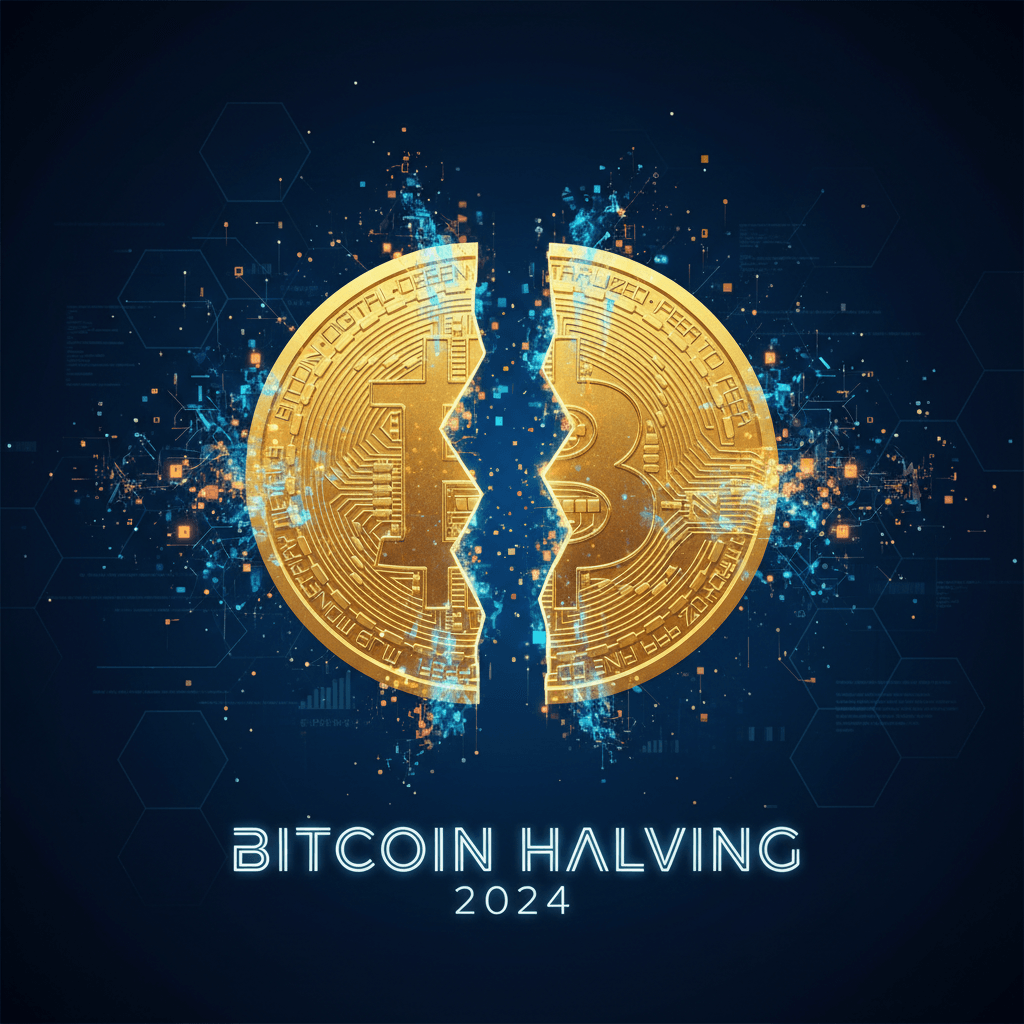
Every four years, something happens to Bitcoin that you can’t find in any other asset class. The supply of new coins entering the market gets cut in half. Not by a committee. Not by a CEO. It just happens because the code says so.
They call it “the halving.” And it’s either the most important event in crypto or the most overhyped – depending on who you ask.
I’ve held Bitcoin through two halvings now. The 2020 event happened during one of the most chaotic periods of my life (early sobriety, pandemic chaos, the works). What I learned watching my portfolio swing 40% in both directions taught me more about patience than any finance textbook ever could.
Here’s the truth about Bitcoin halving – what it actually is, why it matters, and what investors should realistically expect.
What Bitcoin Halving Actually Is (Without the Technical Jargon)
Let me break this down the way I wish someone had explained it to me back in 2019.

Get a VPS from as low as $11/year! WOW!
The Simple Definition: Mining Rewards Get Cut in Half
Bitcoin miners are the people (and machines) that validate transactions on the network. In exchange for this work, they receive brand new Bitcoin as a reward. The halving cuts that reward by 50%.
Here’s the timeline:
- 2009-2012: Miners received 50 BTC per block
- 2012-2016: Dropped to 25 BTC per block
- 2016-2020: Dropped to 12.5 BTC per block
- 2020-2024: Dropped to 6.25 BTC per block
- 2024-2028: Currently at 3.125 BTC per block
This happens automatically every 210,000 blocks. No vote. No meeting. No human intervention. It’s hardcoded into Bitcoin’s technical architecture and has been since day one.
Why Satoshi Nakamoto Programmed This Into Bitcoin
Satoshi wanted Bitcoin to behave like a scarce resource – think gold, not dollars. The Federal Reserve can print unlimited money. There will only ever be 21 million Bitcoin. Period.
According to Satoshi Nakamoto’s original Bitcoin whitepaper, the halving mechanism creates artificial scarcity that strengthens over time. Each halving reduces the flow of new supply, making existing coins relatively more scarce.
The 21 Million Bitcoin Cap and Artificial Scarcity
Here’s what blew my mind when I first understood it: the halving ensures we approach the 21 million cap asymptotically. We’ll never actually “run out” of new Bitcoin – the rewards just keep halving until they become infinitely small.
The last new Bitcoin won’t be mined until around the year 2140. By then, mining rewards will be so tiny that transaction fees will fund the network entirely.
This predictable supply schedule is what separates Bitcoin from every fiat currency on Earth. You know exactly how many Bitcoin exist and will exist. Good luck getting that information from your central bank.
How Bitcoin Halving Actually Works Behind the Scenes
The mechanics are elegant once you understand them. Unlike crypto staking where coins are locked up to validate transactions, Bitcoin uses proof-of-work mining.
Mining Rewards: What Miners Get for Validating Transactions
Bitcoin miners compete to solve complex mathematical puzzles. The winner gets to add the next “block” of transactions to the blockchain and receives the block reward plus transaction fees.
This happens roughly every 10 minutes. So right now, about 3.125 new Bitcoin enter circulation every 10 minutes. Before April 2024, it was 6.25. Before 2020, it was 12.5.
Simple math: less new supply + same or growing demand = price pressure upward.
The 210,000 Block Trigger (And Why It’s About Every 4 Years)
Why 4 years? Because Bitcoin targets 10-minute block times, and 210,000 blocks × 10 minutes ≈ 4 years.
The actual timing varies slightly. The 2024 halving happened on April 20, 2024. The next one should hit around April 2028, dropping rewards to just 1.5625 BTC per block.
What Happens to Miners When Rewards Drop
This is where people panic unnecessarily. “Won’t miners just quit?!”
Bitcoin’s difficulty adjustment handles this beautifully. If miners leave, mining difficulty drops, making it easier (and cheaper) for remaining miners to profit. The network self-balances.
Plus, each halving has historically preceded major price increases. So miners who survive the short-term pain often see their reduced rewards become worth more in dollar terms.
The Complete History of Bitcoin Halvings (And What Happened to Price)
I’m going to give you the data here, but fair warning: past performance doesn’t guarantee future results. I’ve seen too many people lose money assuming “halvings always pump.”
Here’s the historical price data from CoinGecko:
First Halving (2012): 50 to 25 BTC – The Proof of Concept
Bitcoin was trading around $12 when the first halving hit in November 2012. Within a year, it touched $1,100. That’s an 8,858% gain for anyone doing the math.
But here’s what nobody mentions: almost nobody was paying attention. Trading volume was tiny. Exchanges barely existed. This wasn’t a “market event” – it was a handful of early adopters watching code execute.
Second Halving (2016): 25 to 12.5 BTC – The Bull Run Builder
Price at halving: around $670. Peak price in December 2017: $19,700.
This was the halving that made Bitcoin mainstream. I remember seeing it on cable news for the first time. My brother-in-law asked me about it at Thanksgiving. That’s when I knew things had changed.
Third Halving (2020): 12.5 to 6.25 BTC – The Pandemic Surge
This one I watched closely because I was two months sober and needed something productive to obsess over. Bitcoin was around $8,500 at the halving (May 2020). It peaked above $67,000 in November 2021.
I held through the whole thing. Watched it drop 50% during the summer of 2021, watched it recover, watched it drop again. My journal from that period is basically a lesson in emotional regulation.
Fourth Halving (2024): 6.25 to 3.125 BTC – The ETF Effect
The April 2024 halving was different. Bitcoin was already near all-time highs ($65,000+) heading into it. Why? Spot Bitcoin ETFs had just been approved in January 2024.
For the first time, institutional money had an easy on-ramp. BlackRock and Fidelity were buying billions in Bitcoin. The supply shock met a demand shock.
This halving is still playing out. If history rhymes (not repeats), the real fireworks might come 12-18 months later – meaning late 2025 into 2026.
The Biggest Myths About Bitcoin Halving (That Cost Investors Money)
I’ve watched people blow up their accounts on halving trades. Here’s what they got wrong.
Myth #1: Price Automatically Moons Immediately After Halving
Reality: Look at the actual data. Major price peaks have historically occurred 12-18 months AFTER the halving, not during it.
The 2020 halving happened in May. Bitcoin’s peak was November 2021 – 18 months later. People who bought the halving and sold a month later for “not working” missed the whole rally.
Myth #2: The Halving is Already “Priced In”
I hear this every cycle. “Everyone knows the halving is coming, so markets have already adjusted.”
If that were true, why did Bitcoin rally after every single halving? Markets aren’t perfectly efficient. New money enters the ecosystem. Narratives take time to spread.
The efficient market hypothesis is great in textbooks. It’s less reliable when your asset class moves on Elon Musk tweets.
Myth #3: Halvings Make Mining Unprofitable
Some miners will become unprofitable. That’s true. But the difficulty adjustment and improving hardware technology mean mining adapts.
After the 2024 halving, less efficient miners did shut down. But total hashrate (mining power) recovered within months. The network is designed to survive this.
Myth #4: Your Existing Bitcoin Loses Value During Halving
I’ve had people ask me this seriously. The halving only affects NEW Bitcoin issuance. If you own Bitcoin, the halving doesn’t take anything from you.
If anything, it should theoretically help. Less new supply means your existing coins face less sell pressure from miners covering electricity bills.
What Investors Should Actually Do Around Bitcoin Halvings
Now we’re getting to the practical stuff. Whether you’re trading or investing long-term, this section is what actually matters.
The Dollar Cost Averaging Approach (What I Actually Use)
I’ve tested timing strategies. I’ve tried buying “the dip.” Here’s what actually works for me: dollar cost averaging.
Same amount. Every week or month. Regardless of price or halving events.
This approach smooths out volatility and removes the emotional decision-making that gets people in trouble. I started serious accumulation about 500 days before the 2024 halving – not because I timed it perfectly, but because that’s when I had capital available.
Why Timing the Halving is a Fool’s Errand
I tried to time the 2020 halving. Bought heavy beforehand, expecting an immediate pump. Watched my position bleed for weeks.
The problem? Everyone else had the same idea. Buy before, sell the news. The “obvious” trade rarely works in markets this liquid.
Proper risk management strategies beat timing strategies every time. Position sizing matters more than entry price. I’d rather own a small position at any price than a leveraged position at the “perfect” price that liquidates on a 10% dip.
The Long-Term Hold Reality Check
Here’s my honest take: if you’re buying Bitcoin with money you need in the next 4 years, you’re doing it wrong.
This asset class is volatile. 50% drawdowns happen regularly. If you can’t stomach that, either reduce position size or stick with less volatile investments.
The halving thesis is really a 4+ year thesis. Buy before halving, hold through the cycle, accumulate during bear markets, repeat. Understanding compound growth principles helps here – patience in volatile assets can outperform frantic trading.
If you’re looking to buy, start with reputable cryptocurrency exchanges that offer proper security. Don’t sacrifice safety for slightly lower fees.
Why Bitcoin Halving Matters More Than Most Crypto Events
Here’s why the halving is different from most crypto “events” that turn out to be nothing:
It’s the only guaranteed supply shock in this market. Everything else – ETF approvals, regulatory decisions, protocol upgrades – depends on human choices. The halving happens because math says so.
Every halving is also a test of Bitcoin’s core thesis. The protocol has been doing this automatically since 2012. No crashes. No bugs. No intervention needed. That 16-year track record of predictable monetary policy is the whole point.
Compare that to fiat currencies where money printing decisions happen behind closed doors based on political pressures. You don’t have to predict what a central banker will do. You just need to understand fourth-grade math and trust the code.
That’s why I keep coming back to Bitcoin despite the volatility. In a world of unpredictable monetary policy, here’s an asset with a supply schedule I can verify myself.
Frequently Asked Questions
When is the next Bitcoin halving?
The next Bitcoin halving should occur around April 2028. Block rewards will drop from the current 3.125 BTC to 1.5625 BTC per block. The exact date depends on block times, which average 10 minutes but vary slightly.
Does Bitcoin halving affect the Bitcoin I already own?
No. The halving only affects newly minted Bitcoin. Your existing holdings aren’t reduced or affected in any direct way. Theoretically, reduced new supply could help your existing coins maintain value better.
Is Bitcoin halving good or bad for price?
Historically, Bitcoin halvings have preceded significant price increases, typically peaking 12-18 months after the event. However, past performance doesn’t guarantee future results. External factors like regulation, adoption, and macroeconomic conditions also heavily influence price.
What happens when all Bitcoin is mined?
The last Bitcoin will be mined around year 2140. After that, miners will rely entirely on transaction fees for revenue. By then, transaction volume should be high enough to sustain the network. The protocol has over a century to figure this transition out.
The Bottom Line
Bitcoin halving is elegant economics programmed into code. Every four years, supply issuance gets cut in half. Historically, this has preceded major bull runs – but those rallies took 12-18 months to materialize, not 12-18 minutes.
If you’re thinking about investing around the halving cycle, focus on what you can control: consistent accumulation, proper position sizing, and a time horizon measured in years, not weeks.
I held through the 2020 and 2024 halvings. Will I hold through 2028? Almost certainly. Not because I know what price will do, but because I trust the process more than I trust my ability to time markets.
That’s the real lesson the halving taught me: the code will do what the code does. My job is to not screw it up by overtrading.
